PPF vs Ceramic Coating: Which Do You Need?
31 January 2026 · 7 min read · Solarblock
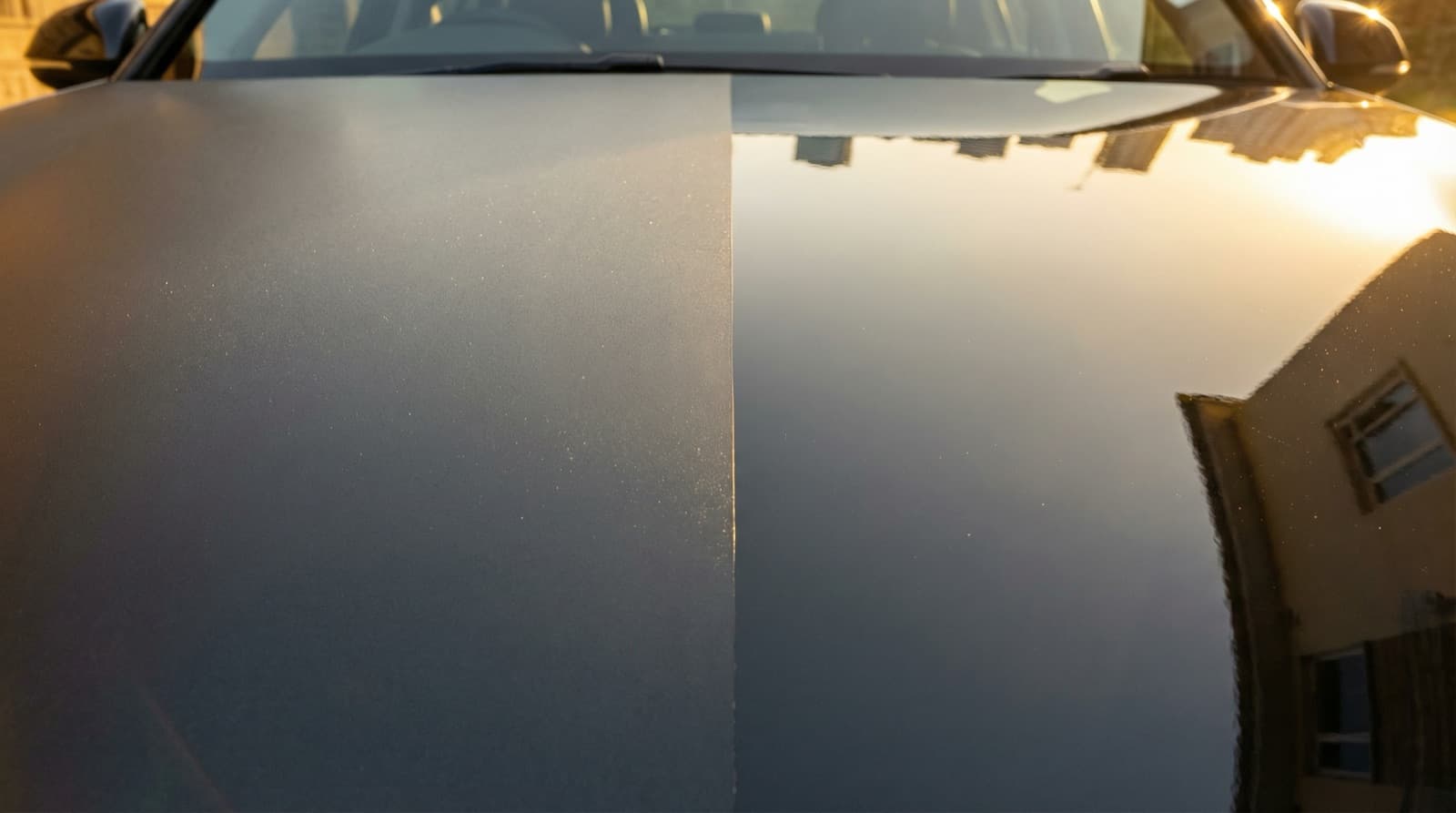
They protect against completely different things.
That's the short answer to "PPF or ceramic coating?" — and it's the one most comparison articles bury under 2,000 words of padding. PPF is a physical barrier. Ceramic coating is a chemical bond. One stops rocks. The other stops dirt, water, and chemical damage. They're not competing products, and framing them as "which is better?" misses the point entirely.
The real question is: what are you protecting against?
What Is PPF (Paint Protection Film)?
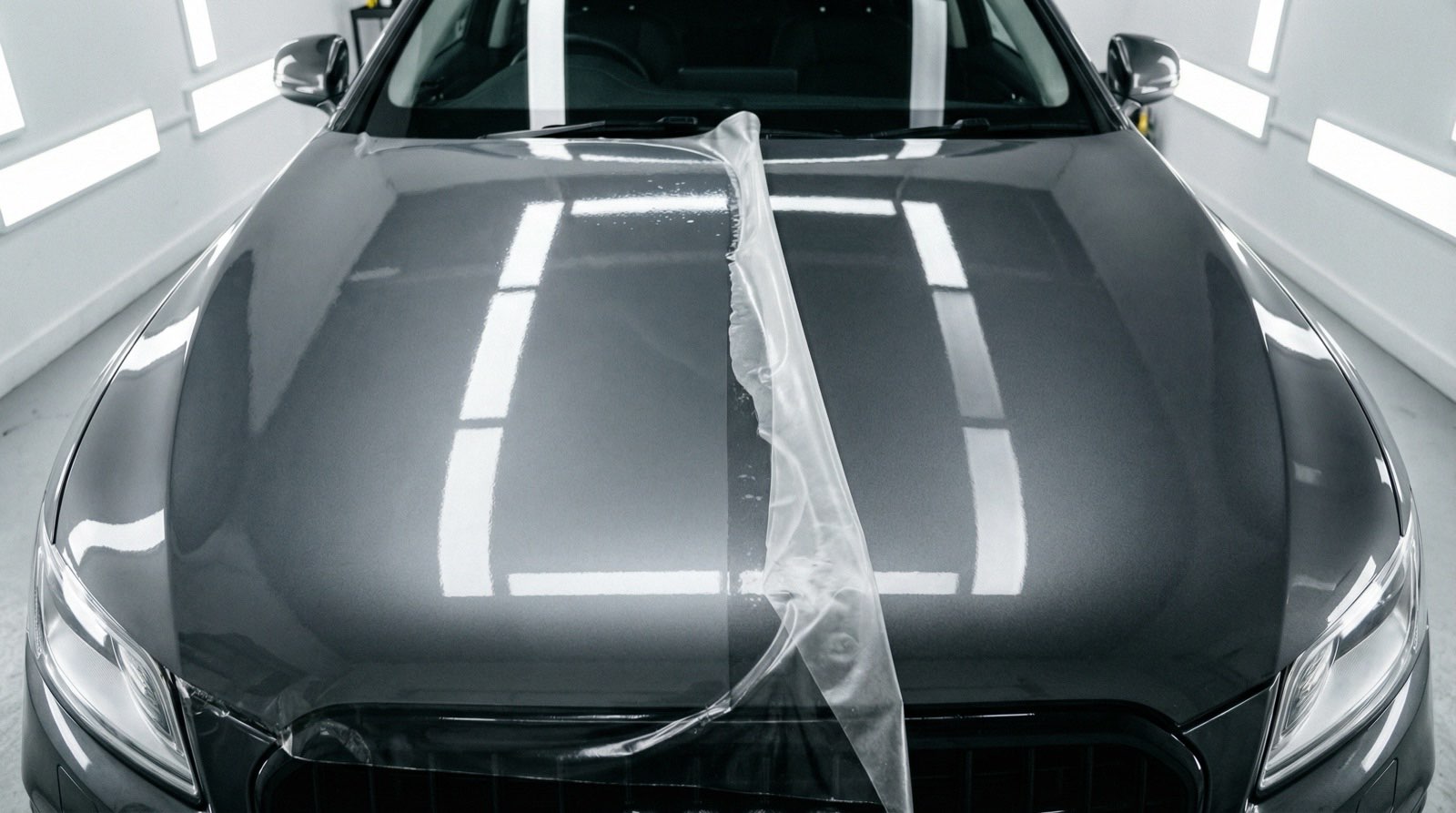
PPF is a thermoplastic urethane film — 150 to 200 microns thick — applied directly over your car's paint. It's a physical barrier that absorbs impact from stone chips, road debris, bug splatter, and minor scratches before they reach the clear coat.
High-end films like LLumar Valor include a self-healing topcoat: light scratches and swirl marks in the film disappear with heat exposure (direct sunlight or warm water). The film is optically clear when installed correctly and doesn't alter the colour of the paint underneath.
PPF is typically applied to high-impact areas — bonnet, front bumper, guards, mirrors, and headlights — though full-body wraps are available for vehicles that warrant the investment.
What Is Ceramic Coating?
Ceramic coating is a liquid SiO2 (silicon dioxide) polymer that bonds chemically to your car's clear coat. Once cured, it forms a semi-permanent layer (1 to 3 microns thick) that's hydrophobic, UV-resistant, and chemically resistant.
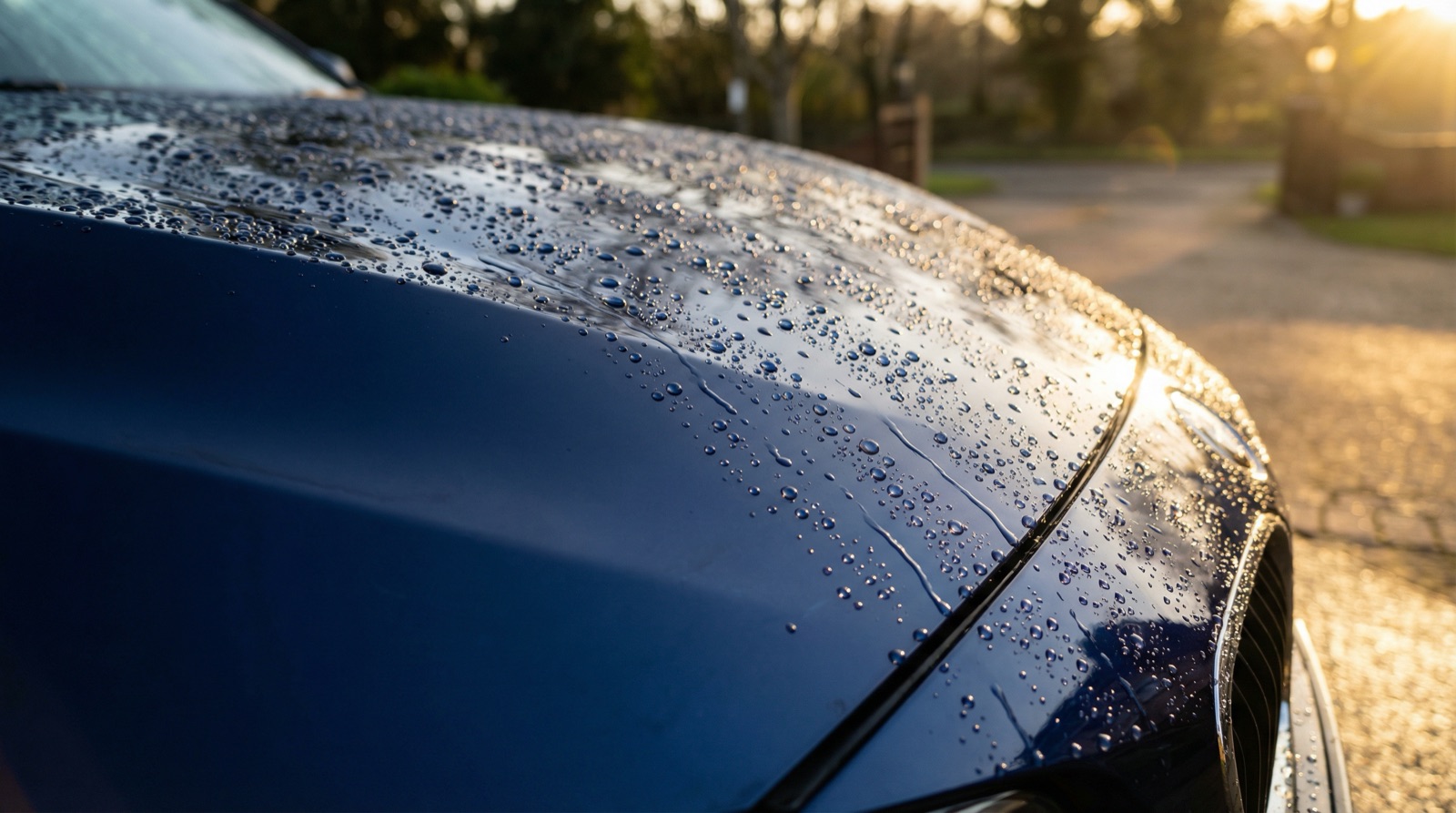
It doesn't stop a rock. It won't prevent a scratch. What it does: repels water, blocks UV radiation, resists chemical etching from bird droppings and tree sap, and makes the paint dramatically easier to clean. Gloss depth increases measurably, and the surface stays protected for years without waxing or sealing.
Professional-grade coatings like Gtechniq Crystal Serum Ultra achieve 10H pencil hardness and are backed by a 9-year manufacturer warranty.
PPF vs Ceramic Coating: Key Differences
| Feature | PPF | Ceramic Coating |
|---|---|---|
| Protection type | Physical barrier | Chemical bond |
| Thickness | 150–200 microns | 1–3 microns |
| Guards against | Stone chips, scratches, road debris, bug damage | UV, chemical etching, oxidation, water spots |
| Self-healing | Yes (heat-activated topcoat) | No |
| Hydrophobic | Moderate | High (>110° water contact angle) |
| Gloss enhancement | Maintains factory finish | Enhances gloss depth |
| Durability | 12 years (LLumar Valor warranty) | 2–9+ years depending on product |
| Cost | From $2,500+ | From $795+ |
| Maintenance | Wash normally | Wash normally |
| Coverage | Usually partial (front end) | Full vehicle |
The difference is fundamental. PPF is armour. Ceramic coating is a shield against the elements. One is measured in hundreds of microns, the other in single digits.
Cost Comparison
PPF pricing in Australia:
- Full front kit (bonnet, bumper, guards, mirrors, headlights): $2,500+
- Full body wrap: $6,000+
Ceramic coating pricing in Australia:
- Entry-level professional coating: $795+
- Mid-range with paint correction: $1,200+
- Flagship coating with multi-stage correction: $1,650+
PPF costs more because the material is expensive and installation is labour-intensive — each panel is either cut from a pre-measured template or hand-trimmed on the car. Ceramic coating application is faster, but the real cost is in the paint preparation (decontamination and correction) that happens before the coating goes on.
A 992 Carrera came in with a visible rock chip next to the numberplate — one chip, deep enough to see the primer. The respray quote was significant — and that only fixes one panel. Full front PPF was $2,800. The PPF costs more upfront, but now the entire front end is armoured against the next decade of highway driving. A respray only fixes the damage already done and leaves the rest exposed.
Can You Combine PPF and Ceramic Coating?
Yes — and this is the best possible outcome for someone who wants both physical and chemical protection.
The correct order: PPF first, ceramic coating on top. The ceramic coating bonds to the PPF surface just as it bonds to clear coat, giving you the physical impact protection of the film plus the hydrophobic, UV-resistant, easy-clean properties of the coating.
Most professional installers — us included — offer combination packages. The PPF protects high-impact zones (bonnet, bumper, guards), and the ceramic coating goes over the entire vehicle, including over the PPF panels. Every surface is protected, and the whole car washes the same way.
The PPF's self-healing topcoat still works under the ceramic layer. Water still beads. Dirt still releases easily. You get everything both products offer without compromise.
Not sure which protection you need?
We'll assess your car and driving habits to recommend the right setup. Hornsby & Gosford.
Get a Free Protection QuoteOr call: 0422 976 875
Which Is Right for Your Car?
This depends on how you use the car and what you're trying to prevent.
You need PPF if:
- You commute on highways or motorways (stone chips are a when, not an if). The drive between Hornsby and Gosford on the Pacific Highway eats bonnets
- You take road trips. Make sure to have PPF installed beforehand!
- You have a new or high-value car and want to keep the paint physically intact
- You've already had stone chip damage and want to prevent further damage requiring a respray
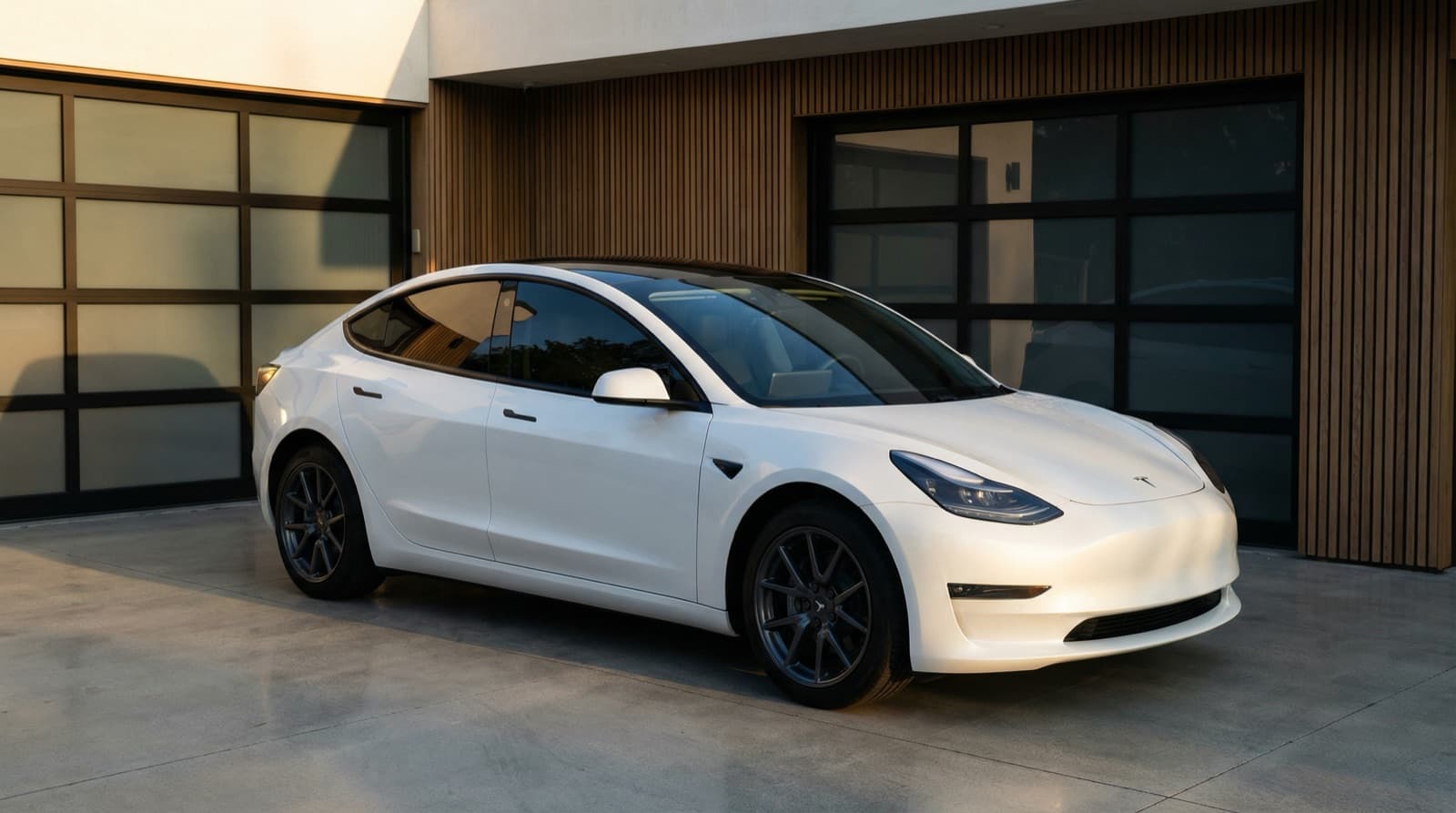
A black Model 3 owner brought his car in after eight months of daily Pacific Highway commuting between Hornsby and Gosford. The bonnet alone was covered in stone chips — each one a spot where the thin Tesla clear coat had been punctured down to the primer. Full front PPF would have prevented every single one.
You need ceramic coating if:
- You want easier maintenance and faster washes
- Your car is parked outdoors and exposed to UV, bird droppings, and tree sap
- You care about gloss depth and paint appearance
- You don't want to wax or seal the car every few months
You need both if:
- You want complete protection — physical and chemical
- You're keeping the car long-term and want to preserve its condition and value
- You have a high-end, limited-production, or dark-coloured vehicle where every defect shows
On a budget? The right answer depends on your main exposure. Highway commuters should prioritise PPF — a stone chip causes permanent damage that no coating can prevent. Garage-kept cars that rarely see highway driving benefit more from ceramic coating, because UV, chemical etching, and wash-induced swirl marks are the bigger threats.
Our Recommendation
These are different products that solve different problems. Comparing them head-to-head is like comparing sunscreen and a helmet. Both protect you, but not from the same thing.
If you can only choose one, start with the product that addresses your primary risk. If stone chips and physical damage are your concern, PPF. If UV, chemical damage, and ease of maintenance are your priority, ceramic coating.
If you can do both, absolutely do both. PPF on the front end, ceramic coating over the whole car. That's the setup we recommend most often. If you've just picked up a new car, see our new car protection guide for the full breakdown of getting everything done at once. Not sure if it's worth the spend? Read is paint protection worth it on a new car.