Window Tinting Cost in Sydney: Pricing Guide
12 February 2026 · 8 min read · Solarblock
$330+ for carbon film. $495+ for ceramic. That's the starting point for a professional window tint in Sydney, and the gap comes down to film type.
Carbon film starts at $330+, hybrid at $395+, and ceramic — the film that actually blocks infrared heat and carries a lifetime manufacturer warranty — at $495+. Everything below is a breakdown of what those prices include and why the cheapest quote isn't the one you want.
Window Tinting Prices in Sydney — What to Expect
Here are Solarblock's starting prices for professional window tinting, based on a standard 4-door sedan with all side windows and rear windscreen.
| Film Type | 4-Door Sedan |
|---|---|
| Carbon film | From $330+ |
| Hybrid film | From $395+ |
| Ceramic film | From $495+ |
Windscreen visor strip available — contact us for a quote.
These are installed prices — film, labour, and warranty included. If a quote you're getting doesn't specify what film brand is being used, ask. The brand and type of film is the most important variable in the price.
What Affects Window Tinting Cost?
Film type. This is the primary cost driver. We fit three tiers: carbon, hybrid, and ceramic. Carbon film provides UV protection and colour stability but does not block infrared heat. Hybrid adds moderate heat rejection. Ceramic is the top tier — nano-ceramic particles block 45–80% of infrared energy, making a genuine difference to cabin temperature. You'll see cheaper quotes using dyed film, but we don't fit it — dyed film degrades fast in Australian UV and offers minimal heat rejection. Over the life of the film, ceramic is the most cost-effective because you install it once and get a lifetime manufacturer warranty.
Number of windows. Most quotes cover the four side windows and the rear windscreen — that's a standard five-window tint. Adding a windscreen visor strip or tinting additional glass (like quarter-panel windows on SUVs or cargo area windows on wagons) increases the price.
Vehicle size. Larger vehicles have larger glass areas. An SUV rear windscreen is substantially bigger than a sedan's, uses more film, and takes longer to heat-shrink. We quote per vehicle — contact us for your specific model.
Window complexity. Most side windows are relatively straightforward. Rear windscreens with sharp compound curves or integrated defroster lines take more time and skill. Some European vehicles have complex glass shapes that require extra heat-shrinking work, and utility vehicles may have accessories that make access more difficult.
Carbon vs Hybrid vs Ceramic — What's the Difference?
| Feature | Carbon Film | Hybrid Film | Ceramic Film |
|---|---|---|---|
| Sedan price | From $330+ | From $395+ | From $495+ |
| Infrared heat rejection | No | Moderate | 45–80% |
| UV blocking | 99% | 99% | 99% |
| Signal interference | None | None | None |
| Colour stability | No degradation | No degradation | No degradation |
| Warranty | Lifetime manufacturer | Lifetime manufacturer | Lifetime manufacturer |
The difference between tiers comes down to heat. Carbon film blocks UV and prevents fading, but it doesn't reject infrared — your cabin still gets hot. Hybrid adds moderate infrared rejection. Ceramic blocks 45–80% of infrared energy, which on a February afternoon in Western Sydney is the difference between a cabin you can sit in and one that takes five minutes of air conditioning to become bearable.
Our position is that ceramic is the right film for Sydney conditions. It carries a premium over carbon, but the infrared heat rejection alone justifies it and you install it once.
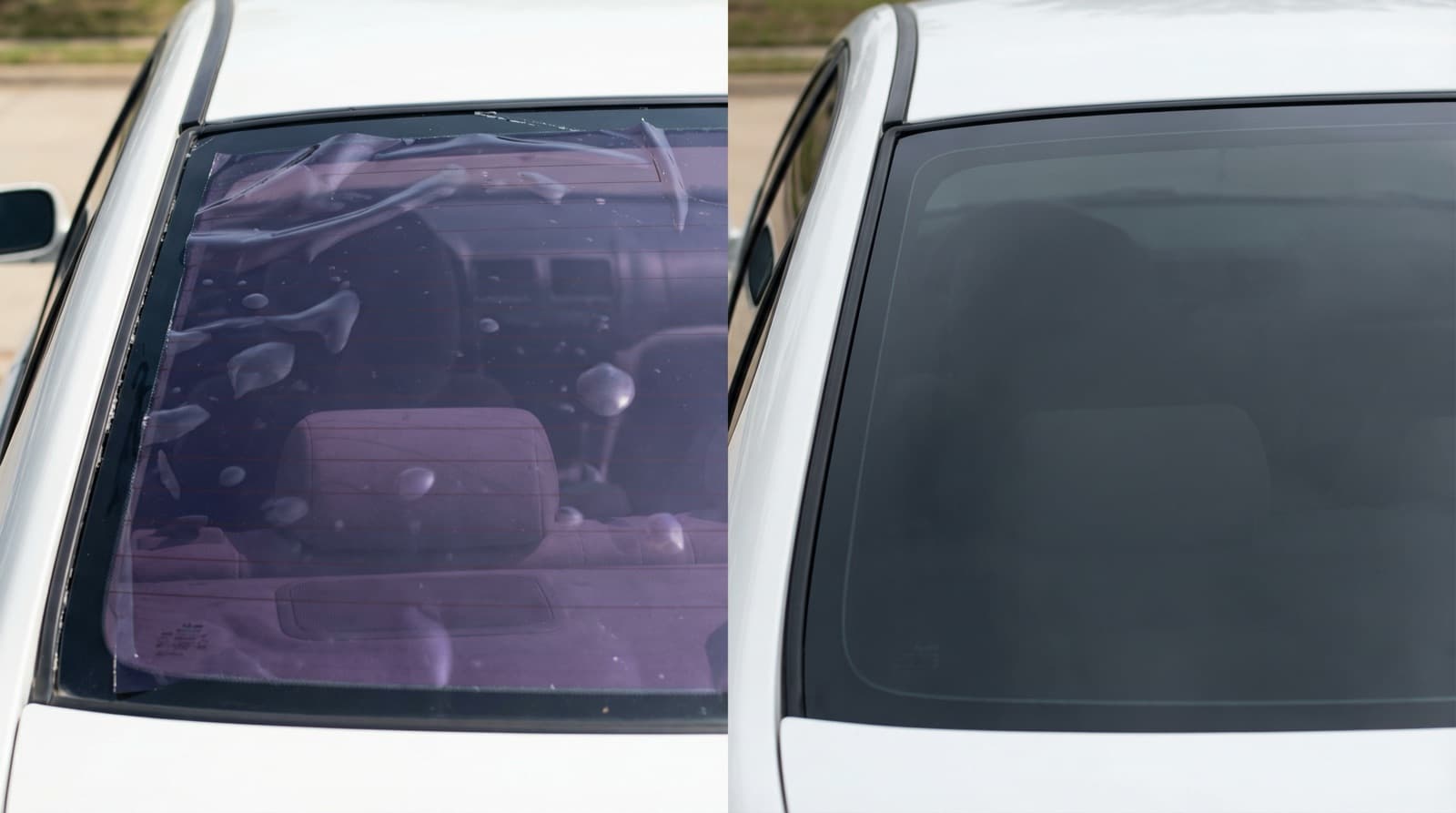
What about dyed film? It's the cheapest option on the market, and some shops still fit it. Dyed film blocks around 50% of UV (versus 99% for all three of our tiers), fades to purple within a few years in Australian sun, and carries short-term warranties. We don't fit it.
Want to know exactly what your car will cost?
We quote per vehicle. Hornsby & Gosford workshops.
Get a Free QuoteOr call: 0422 976 875
For a detailed comparison of all film types, read our ceramic window tint guide.
Price Guide by Vehicle Type
Sedan (4-door). The baseline for window tinting pricing. Standard glass shapes, moderate surface area. Most sedans fall in the middle of the price ranges above.
SUV / 4WD. Larger glass panels across the board, particularly the rear windscreen and cargo area windows. We quote per vehicle — contact us for your specific model. Vehicles with privacy glass from the factory may only need front window tinting, which reduces the cost substantially.
Ute. Pricing depends on cab style. A single-cab ute with a small rear window is cheaper than a sedan. A dual-cab ute with full rear windows costs more. Utes with canopy windows are quoted separately — canopy glass is thinner and sometimes curved differently.
Van / people mover. Vans with extensive rear glazing — think Hiace, Carnival, Staria — can exceed SUV pricing because of the sheer amount of glass. Cargo vans with minimal rear windows are on the cheaper end.
Performance / European vehicles. Some models have double-laminated or acoustic glass on the front windows, which affects film adhesion and VLT readings. An experienced installer will know which vehicles need specific film types or techniques. This can add to the price, but it's worth getting right.
What's Included in Professional Tinting?
A reputable professional tint job should include:
- The film — specified by brand and type, not just "window tint"
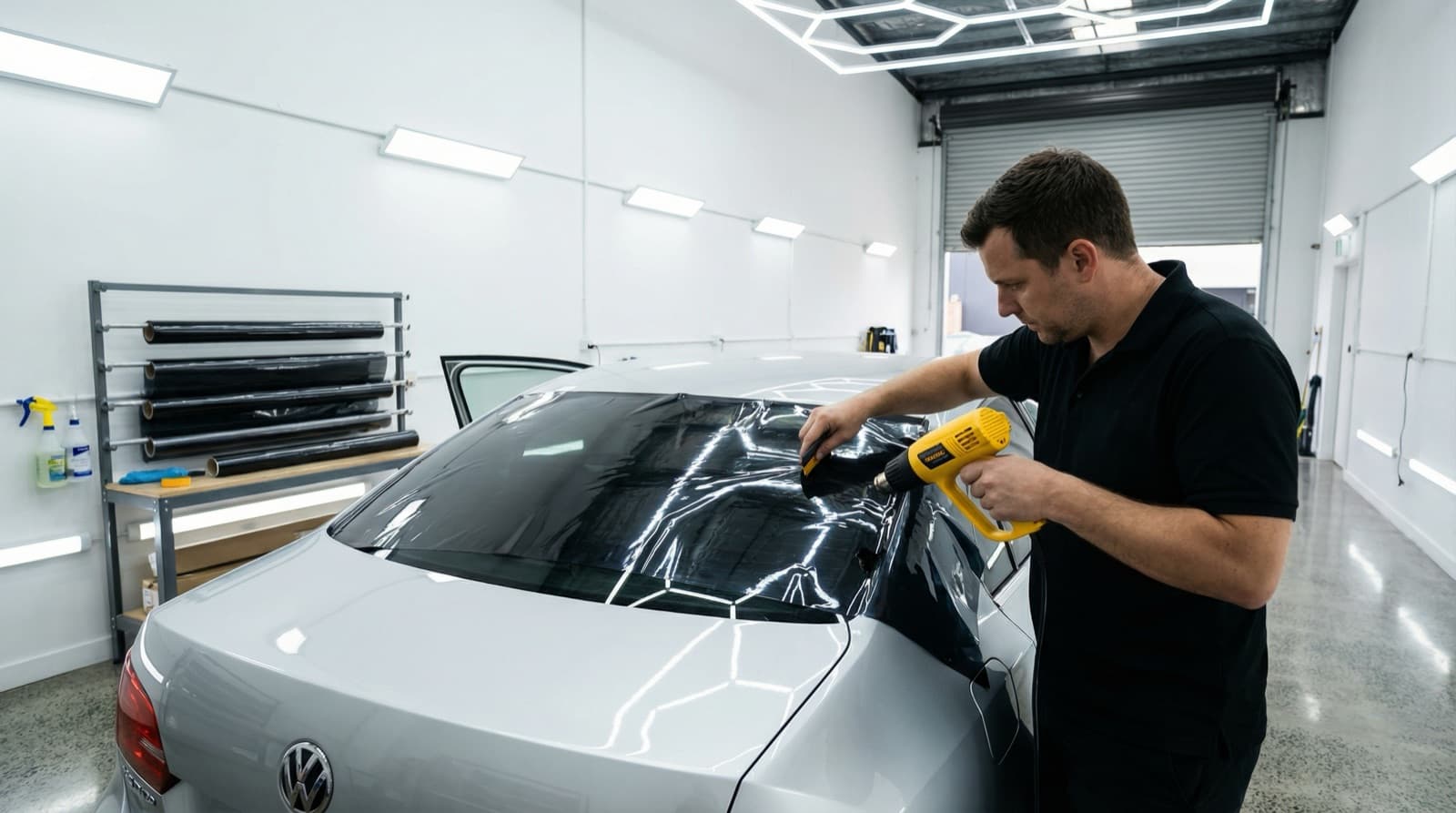
- Full installation labour — surface preparation, film application, heat shrinking, edge trimming
- NSW legal compliance — we use ceramic, hybrid, and carbon film at known VLT ratings matched to your vehicle's factory glass, and photometric VLT verification is available if you want a confirmed reading
- Warranty — both installer workmanship warranty and film manufacturer warranty. These are separate. The manufacturer warranty covers film defects (bubbling, discolouration, peeling). The installer warranty covers the installation itself (lifting edges, contamination, adhesion failure).
- Post-installation care instructions — when you can roll windows down, how to clean the film, what products to avoid
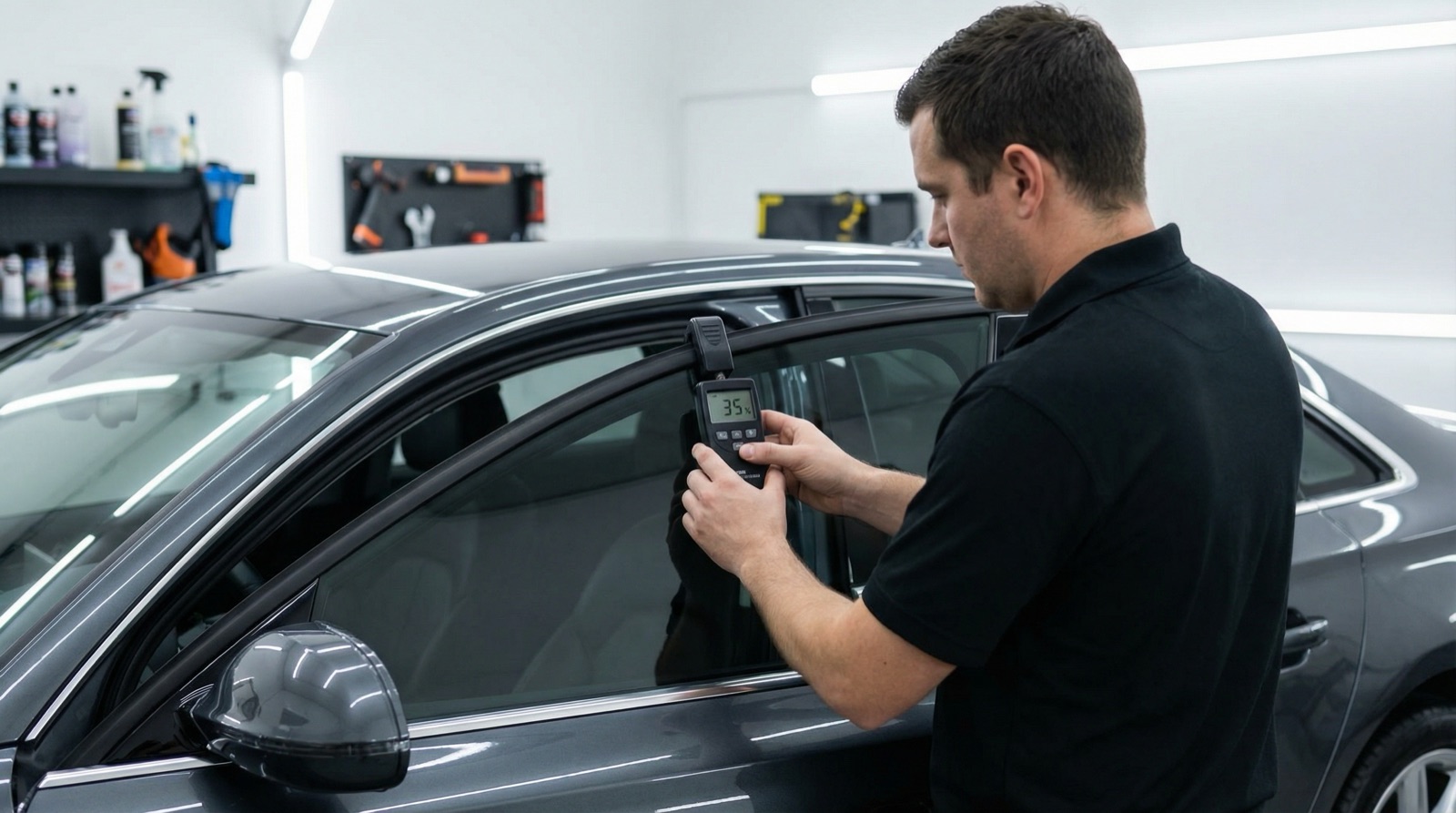
If a quote doesn't specify the film brand, that's a red flag. You should know exactly what's going on your car and that the VLT rating will be road-legal on your glass.
For NSW tint laws and VLT limits, see our guide to the darkest legal tint in NSW.
Getting the Best Value
The cheapest window tinting quote in Sydney is not the best value. It's the one most likely to use low-grade dyed film that fades within two years.
Here's how to evaluate quotes:
Ask what film brand is being used. If they can't or won't tell you, walk away. Reputable installers are upfront about their products because the brand is part of the value.
Ask about warranty. A quality tint job comes with both a manufacturer warranty on the film and an installer warranty on the workmanship. If there's no warranty, you have no recourse when the film fails.
Ask about VLT measurement. Any installer doing front windows should measure the combined VLT after installation. If they don't own a photometric meter, they can't confirm your tint is legal.
Compare like for like. A cheap dyed tint job and a $495+ ceramic tint job aren't competing quotes — they're different products. Compare ceramic to ceramic, and make sure the film grade and brand are equivalent.
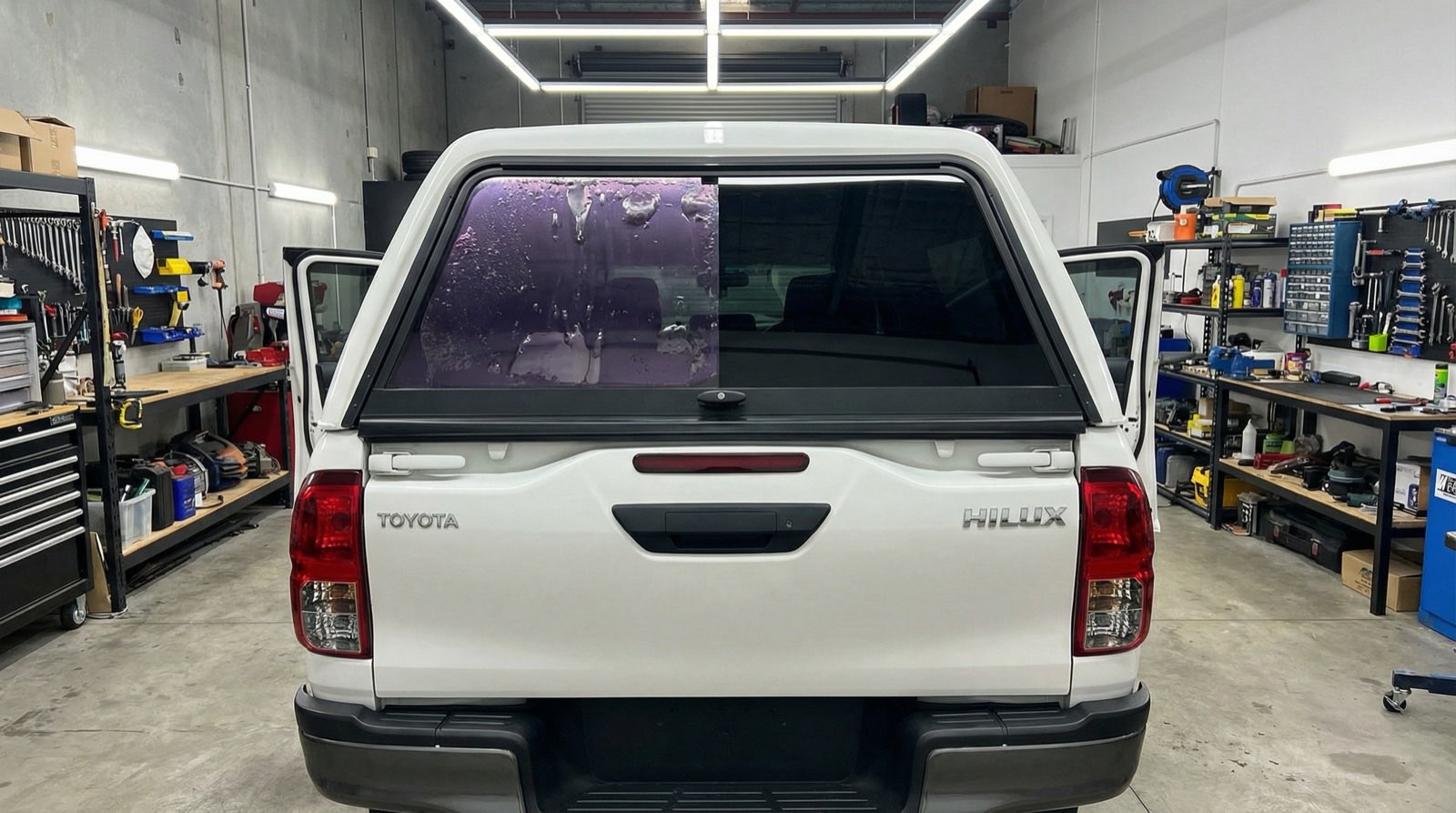
We hear this story regularly — a Hilux owner whose cheap dyed film failed in three years. The rear window was purple enough to see from across the carpark, and the fronts had started bubbling along the top edge. By the time he paid for removal and then professional ceramic tint, he'd spent more than ceramic would have cost from the start.
The real cost of cheap film is that you end up paying twice.
Frequently Asked Questions
How much does car window tinting cost in Sydney?
Professional window tinting in Sydney starts from $330+ for carbon film, $395+ for hybrid, or $495+ for ceramic. These are installed prices including film, labour, and a lifetime manufacturer warranty.
Is ceramic window tint worth the extra cost?
Yes. Ceramic tint costs more than carbon but carries a lifetime manufacturer warranty and blocks 45–80% of infrared heat — carbon doesn't reject infrared at all. After an Australian summer, you'll be glad you chose ceramic.
What's included in professional window tinting?
A professional tint job includes the film (specified by brand), full installation labour, surface preparation, heat shrinking on curved glass, and both a manufacturer film warranty and installer workmanship guarantee. Photometric VLT verification is available on request.
How to Get a Quote
We install professional window tint — carbon, hybrid, and ceramic — at our Hornsby and Gosford workshops, covering the Upper North Shore and Central Coast. Every job comes with a lifetime manufacturer warranty and our own workmanship guarantee.
Contact us for a free quote. We'll confirm your vehicle, recommend the right film type and shade, and give you a fixed price before any work starts — no surprises.
For more on how professional installation compares to DIY, read our professional vs DIY window tinting guide.