Ceramic Window Tint: The Complete Guide
25 January 2026 · 11 min read · Solarblock
Between 45% and 80% of the sun's infrared heat never makes it through a ceramic window tint. That single number is the reason ceramic film has taken over the professional tinting industry, and why the cheap dyed film that came on your car from the factory or the previous owner is doing almost nothing for you.
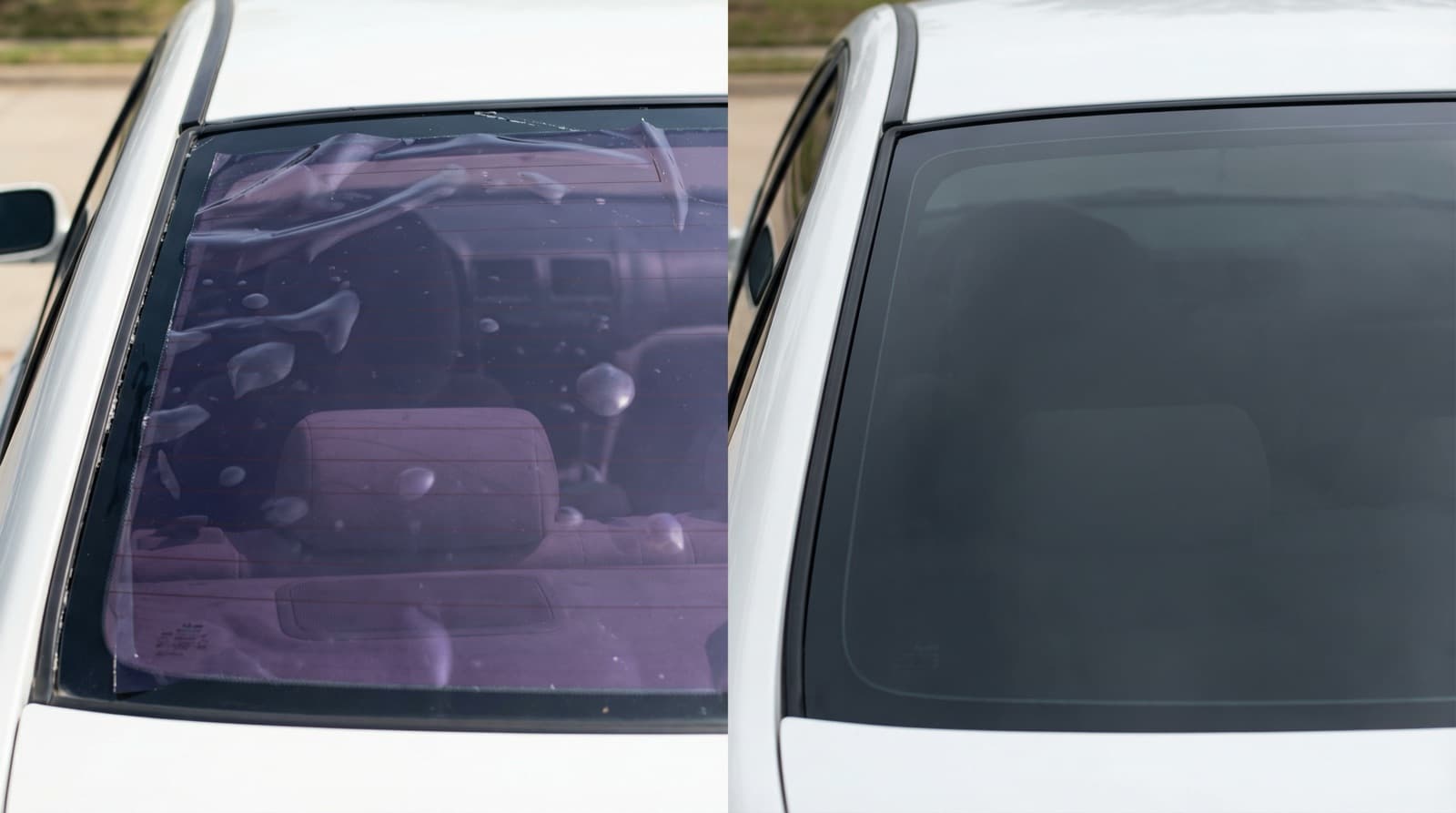
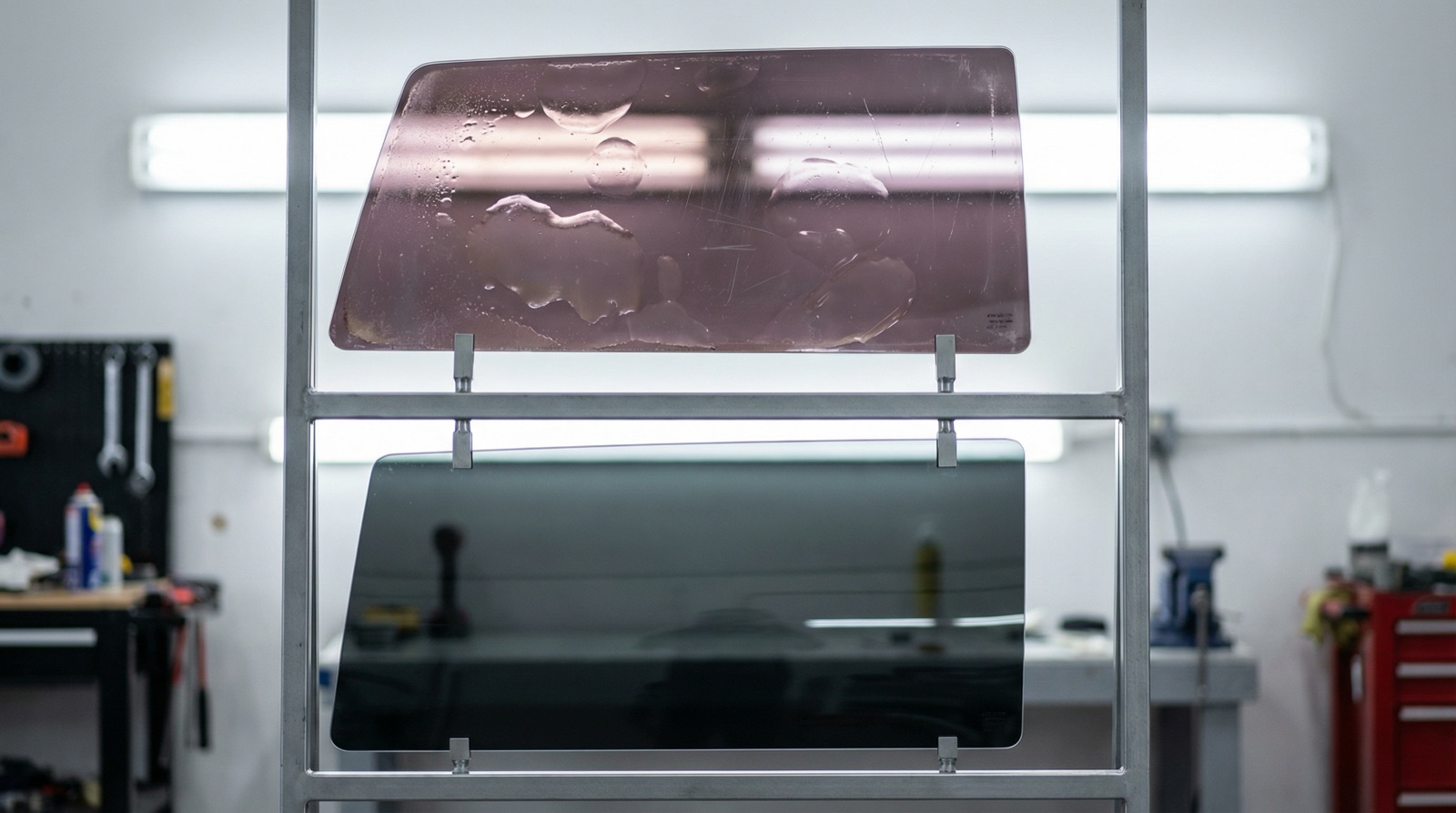
We've seen more cars with dyed film that's gone purple in under three years than we can count. They didn't know there was an alternative when they first had it done. Once they see ceramic film side by side with what's on their car, the conversation is short.
If you're looking at window tinting for your car and wondering whether ceramic film is worth the premium, this guide covers exactly how it works, what it costs, and how it stacks up against standard tint options available in Sydney.
What Is Ceramic Window Tint?
Ceramic window tint is a multi-layer film that uses nano-ceramic particles embedded in the adhesive layer to block heat and ultraviolet radiation. Unlike metallic or dyed films, ceramic tint contains no metal and no organic dyes — just inorganic ceramic particles bonded into a stable, optically clear film.
The result is a tint that rejects significantly more heat than standard films, blocks 99% of UV rays, and does it all without degrading over time the way dyed film does.
Ceramic tint is available in a range of VLT (visible light transmission) levels, from nearly clear heat-rejection films down to dark privacy tints. That means you can get serious heat reduction even on your windscreen or front windows where darker tints aren't legal.
How Ceramic Tint Works
Standard dyed tint works by absorbing light. The dark colour soaks up some of the sun's energy, but it also re-radiates much of that heat into the cabin. Metallic tint reflects some infrared energy using tiny metal particles, but those same particles can sometimes interfere with radio signals.
Ceramic tint takes a different approach. The nano-ceramic particles are tuned to selectively block infrared wavelengths — the part of the solar spectrum that creates heat — while letting visible light pass through relatively unchanged. This is called spectral selectivity.
In practical terms: a ceramic film at 35% VLT (a medium tint) can reject 60% or more of solar heat. A dyed film at the same 35% VLT might reject 10–15%. You get the same appearance on the glass but radically different performance inside the cabin.
The ceramic particles are inorganic and chemically stable. They don't fade, don't oxidise, and don't break down under UV exposure. That's why ceramic films hold their colour and performance for a decade or more, while dyed films degrade within a few years — faster in Australian conditions where UV intensity is among the highest in the world.
Benefits of Ceramic Window Tint
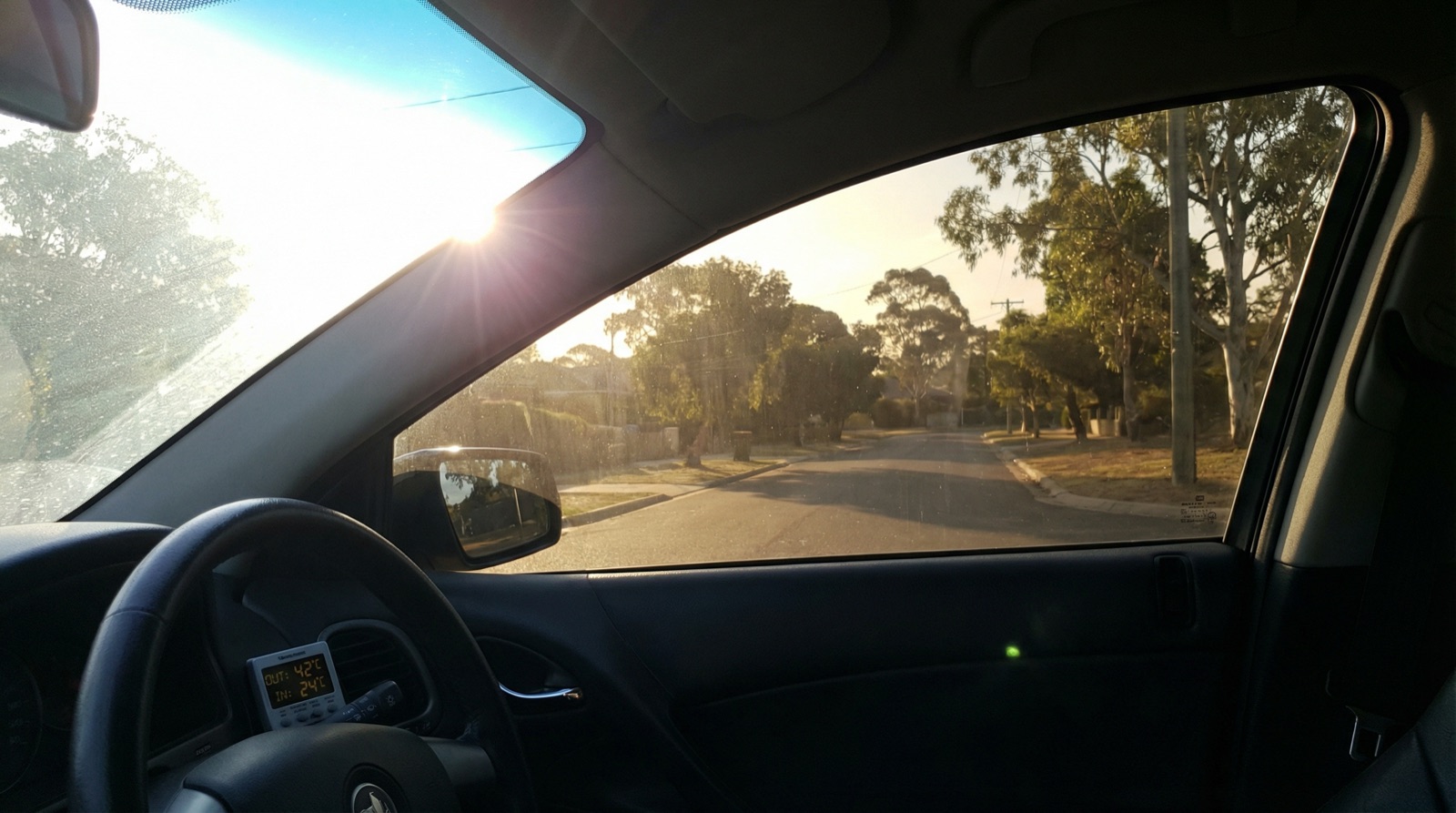
Superior heat rejection. Ceramic tint blocks 45–80% of infrared heat depending on the grade and VLT level. On a 38-degree day in Western Sydney, that's the difference between a bearable cabin and one that takes ten minutes of air conditioning to cool down.
99% UV protection. Ceramic film blocks 99% of ultraviolet radiation — both UVA and UVB. Dyed film manages roughly 50%. UV causes skin damage, fades leather and dashboard trim, and accelerates interior ageing. For anyone spending serious time in their vehicle on the road between Hornsby and the Central Coast, that UV protection matters.
No signal interference. Because ceramic tint contains zero metallic particles, it doesn't block or degrade electronic signals. Your phone, GPS, Bluetooth, toll tags (E-Tag and Linkt), and keyless entry all work exactly as they should. Metallic tint, in certain circumstances, may cause issues with phone-key entry, toll tags, and GPS navigation.
Colour stability. Ceramic film doesn't turn purple. It doesn't bubble. It doesn't fade. The ceramic particles are inorganic — they can't oxidise or break down the way organic dyes do. A quality ceramic tint installed today will look the same in ten years.
Reduced glare. The selective filtration reduces harsh glare without making the cabin too dark. Particularly useful for early morning and late afternoon driving on east-west roads.
Lower air conditioning load. Less heat entering the cabin means your climate control works less hard. On longer drives this translates to measurably lower fuel consumption or, for EVs, better range.
Ceramic Tint vs Regular Tint
Not all window film is the same. Here's how the three main types compare across the metrics that actually matter.
| Feature | Dyed Film | Carbon Film | Ceramic Film |
|---|---|---|---|
| Heat rejection | 5–15% | Minimal — does not block IR | 45–80% |
| UV blocking | ~50% | ~90% | 99% |
| Signal interference | None | None | None |
| Metallic content | No | No | No |
| Colour stability | Fades/purples in 1–3 years | Good | Excellent — no fading |
| Longevity | 3–5 years | 5–7 years | 10+ years |
| Glare reduction | Moderate | Good | Excellent |
| Price (relative) | $ | $$ | $$$ |
For a deeper dive into each film type — including metallic tint and why we don't recommend it — read our full ceramic tint vs regular tint comparison.
Dyed film is the cheapest option and, in Australian conditions, a false economy. It does almost nothing for heat — 5–15% rejection is barely perceptible inside the cabin. And it degrades fast. The UV intensity in Sydney breaks down organic dyes within a few years, leaving you with purple, bubbling film that looks worse than bare glass. You'll pay to have it stripped and replaced, spending more than if you'd gone with ceramic in the first place.
Carbon film is a mid-range option you'll find at some shops. It holds its colour well and doesn't interfere with signals. But carbon doesn't block infrared radiation — its advantages over dyed film are colour stability and longevity, not heat rejection. It can't match ceramic on infrared blocking or UV protection.
Ceramic film is what we fit. It costs more upfront than carbon, but it lasts two to three times longer, performs dramatically better on heat and UV, and never degrades. Over the life of the vehicle, ceramic tint is the cheaper option — you install it once and forget about it. The product we use the most, LLumar Vantage, comes with a lifetime manufacturers warranty.
Our position: unless you're tinting a car you plan to sell within a year, ceramic is the right call. The performance gap is too large to ignore, and the lifespan difference eliminates the cost argument.
Is Ceramic Tint Worth the Extra Cost?
The typical price premium for ceramic window tint over standard dyed film is 30–50%. On a full car tint job, that might mean an extra $150–$250 depending on the vehicle.
Here's how the maths works out:
A dyed tint job might last 3–5 years before it needs replacing. A ceramic tint job lasts 10+ years. Over a decade, you'll pay for dyed film two or three times — plus the cost of stripping the old film each time. Ceramic pays for itself before the five-year mark.
But cost-per-year isn't even the strongest argument. The heat rejection difference is enormous. Going from 10% rejection (dyed) to 60%+ (ceramic) transforms how the car feels in summer. Your air conditioning reaches temperature faster, your fuel bill drops slightly, and passengers stop complaining.
Then there's UV protection: 99% versus roughly 50%. That's your skin, your leather seats, your dashboard, your steering wheel. UV damage is cumulative and irreversible.
For drivers in the Hornsby and Central Coast area who spend real time on the road, ceramic tint isn't a luxury add-on. It's the baseline for a properly protected vehicle.
Ready to upgrade to ceramic tint?
We use professional-grade ceramic film at both our Hornsby & Gosford workshops.
Get a Free QuoteOr call: 0422 976 875
Window Tint Laws in NSW
NSW has specific rules about how dark your window tint can be, and the limits vary by window position. The front side windows and windscreen have the strictest requirements.
The key numbers:
- Windscreen: Must maintain at least 70% VLT. Only a tinted band at the top — no more than 10% of the height or the wiper sweep arc, whichever is greater
- Front side windows: Must allow at least 35% VLT
- Rear side windows and rear windscreen: Must allow at least 20% VLT
- Film reflectance: Must not exceed 10%
Getting caught with illegal tint on your front windows carries a fine and a defect notice. You'll have to remove the film and get the vehicle re-inspected.
The good news: ceramic tint is available in lighter shades that meet NSW legal limits while still delivering strong heat rejection. A ceramic film at 35% VLT will reject far more heat than a dark dyed film at 20% VLT — and it's road-legal on every window.
We've written a detailed breakdown of NSW tint laws, VLT limits, and fines in our guide to the darkest legal tint in NSW.
Choosing the Right Ceramic Tint for Your Car
Ceramic window film comes in different grades and VLT levels. Choosing the right combination depends on what you're prioritising.
VLT level. Lower VLT means a darker tint. For front windows in NSW, you're limited to 35% VLT or higher. For rear windows, you can go as dark as 20%. Most customers choose 35% on the fronts and 20% on the rears for a balanced look.
Film grade. Not all ceramic films perform the same. Entry-level ceramic tints might block 45% of infrared heat. Premium grades push that to 70–80%. The difference comes down to the concentration and quality of the ceramic particles in the film. We use professional-grade ceramic films that sit at the upper end of the performance range.
Vehicle type. Large SUVs and utes with expansive glass areas benefit more from high-grade ceramic film — there's simply more surface area letting heat in. Smaller cars with less glass can get away with mid-grade ceramic and still notice a big improvement.
Your priorities. If heat rejection is the main goal (and for most people in Sydney, it should be), prioritise the film grade over going darker. A high-grade ceramic at 35% VLT will reject more heat than a budget ceramic at 15% VLT.
Colour match. Ceramic film has a neutral tone — it doesn't shift green or blue the way some metallic films do. This means it looks clean and consistent across all windows, regardless of whether you're matching factory privacy glass on the rears.
Professional Installation vs DIY
Ceramic window tint is a professional product. The film itself costs more than standard tint, the adhesive systems are more demanding, and the installation technique leaves no margin for error.
Why DIY is risky with ceramic film:
The film is stiffer than dyed film and less forgiving during heat shrinking — the process of conforming flat film to curved glass. Get it wrong and you'll see fingers, creases, or gaps at the edges. On a rear windscreen with compound curves, even experienced DIYers struggle.
Contamination is the other issue. A single dust particle trapped under ceramic film is visible forever. Professional installers work in controlled environments with filtered air and wet-application techniques that minimise contamination. Your garage or driveway can't replicate that.
Then there's the warranty. Manufacturer warranties on ceramic film — lifetime, in most cases — typically require professional installation by an authorised dealer. DIY installation voids the warranty, which removes one of the key advantages of paying for ceramic film in the first place.
What professional installation gets you:
- Precision-cut film using digital templates for your exact vehicle model
- Controlled environment to prevent contamination
- Proper heat shrinking on curved glass
- Edge sealing and tucking for a factory finish
- Full manufacturer warranty coverage
- Post-installation inspection and quality guarantee
We cover the full comparison, including costs and common mistakes, in our professional vs DIY window tinting guide.
For ceramic film specifically, professional installation isn't optional. It's the only way to get the performance and longevity you're paying the premium for.