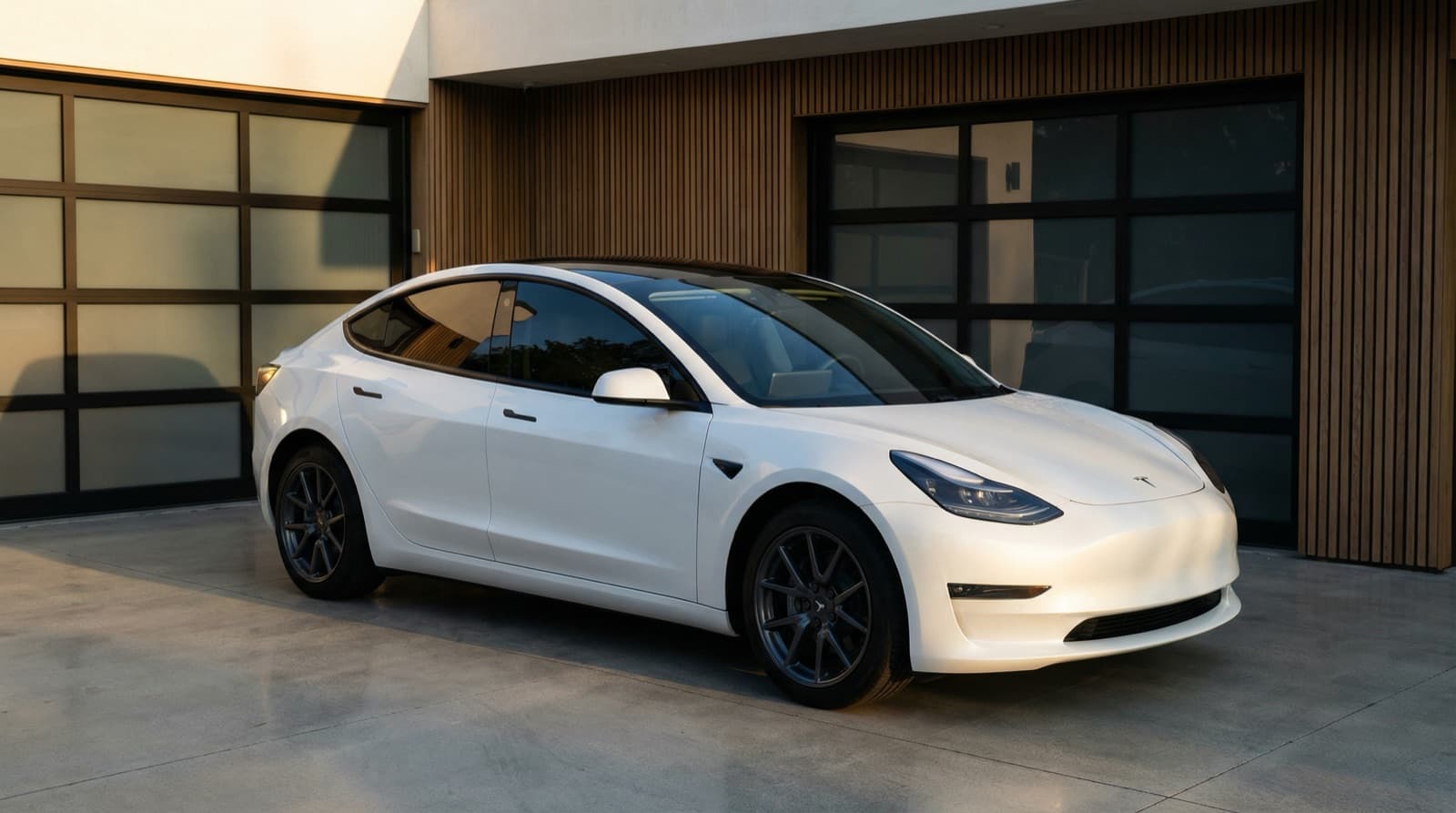
Ceramic Tint vs Regular Tint: What's the Difference?
19 January 2026 · 8 min read · Solarblock
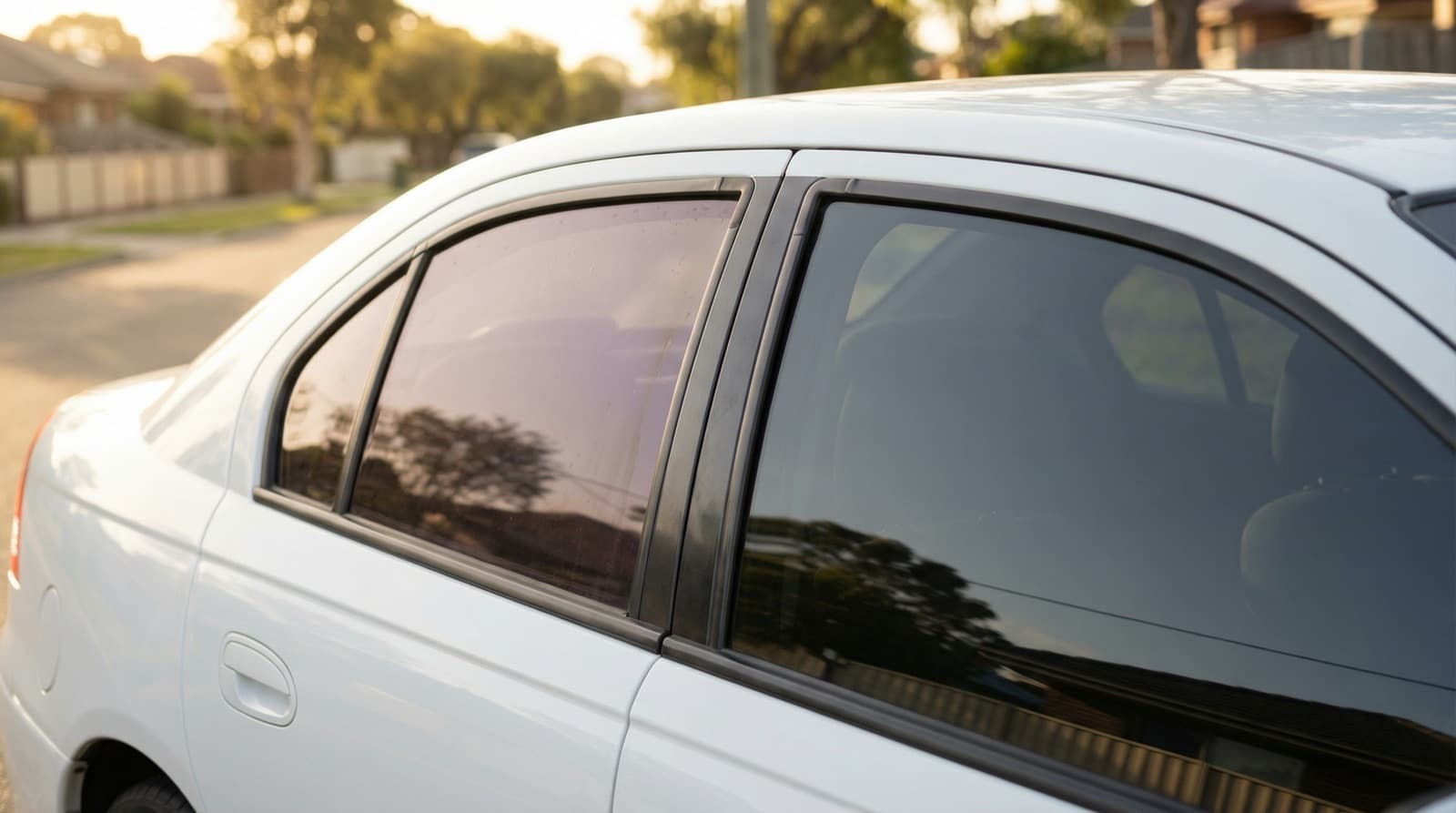
If you're getting your car window tinting in Sydney, ceramic film is the right choice for most people. Here's why.
Regular tint — whether dyed or metallic — has a place in markets with mild climates and low UV. Australia is neither of those things. The UV index in Sydney regularly hits 11+ in summer (the WHO classifies 8–10 as "very high" and 11+ as "extreme"), and cabin temperatures in direct sun push past 60°C. The tint on your windows is functional. And on function, ceramic film outperforms every other type by a significant margin.
Here's the full breakdown.
What Is Regular Window Tint?
"Regular tint" covers two main film types: dyed and carbon. They're different products at different price points, but both sit below ceramic in performance.
Dyed film is the entry-level option. It uses a layer of dye between an adhesive layer and a protective topcoat. The dye absorbs some solar energy and darkens the glass. It's cheap, widely available, and does provide some privacy and glare reduction.
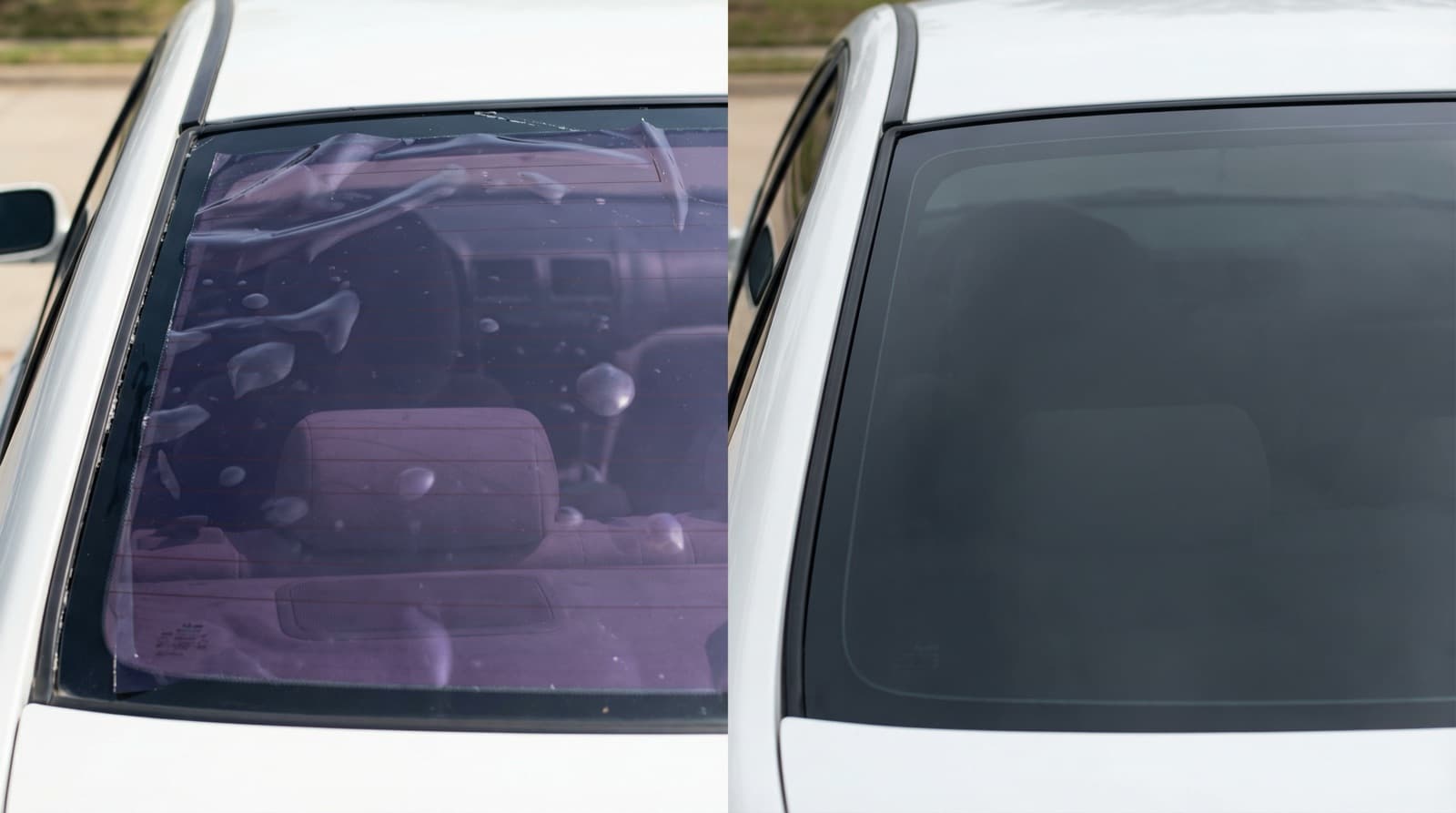
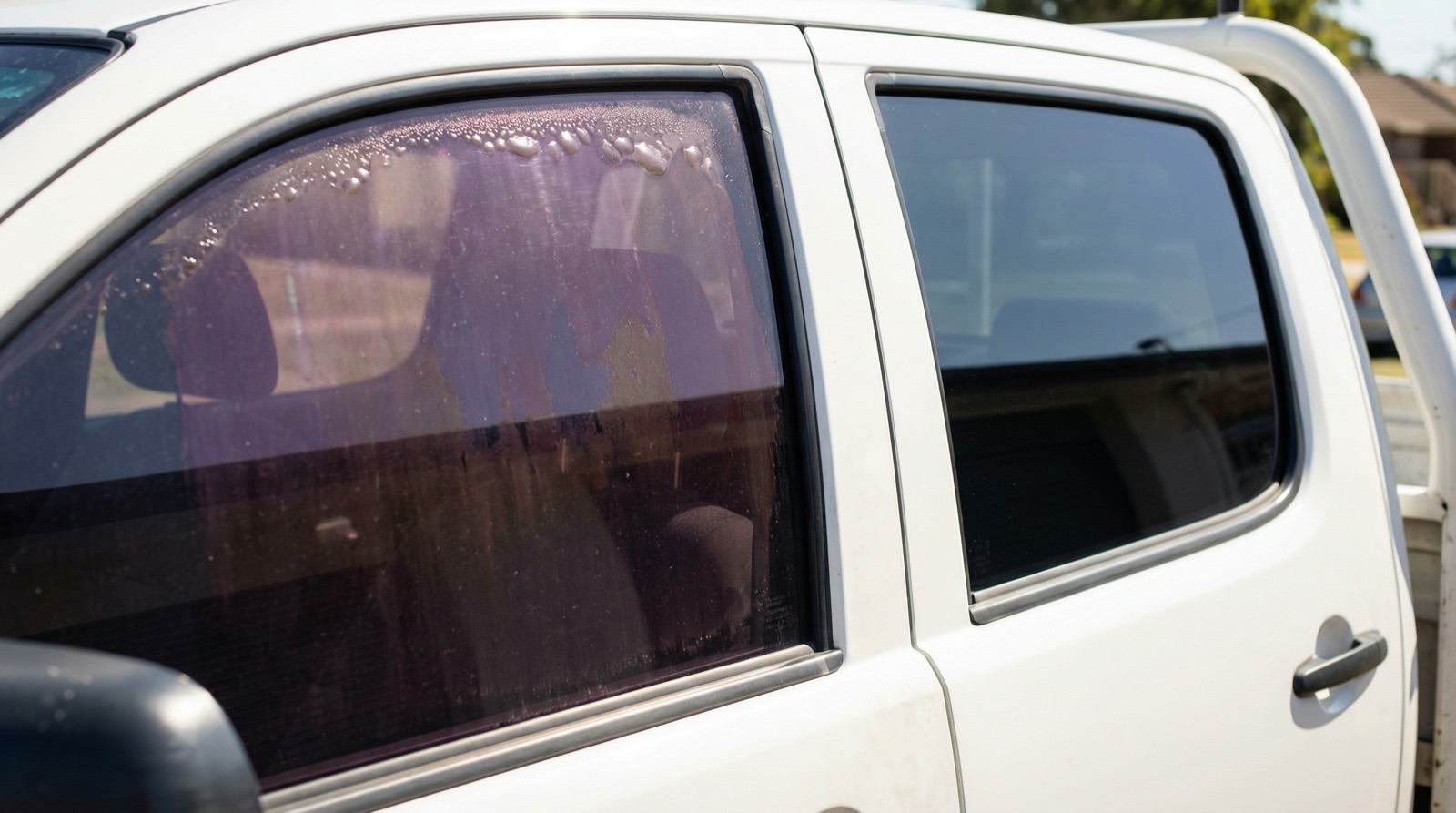
The problem is durability. Dyed film degrades under UV exposure. In Australian conditions, that degradation shows up as:
- Purpling — the dye breaks down and shifts colour, turning the film a noticeable purple
- Bubbling — the adhesive fails and air pockets form between the film and glass
- Peeling — edges lift and the film separates from the glass surface
We have seen many cars with dyed film only a few years old where the tint has gone full purple. Occasionally the owners don't even know it was dyed film when they bought the car. The previous owner had it done cheap and never mentioned it.
Dyed film's heat rejection is minimal — 5 to 15% of infrared energy. It darkens the glass, which feels like it should reduce heat, but the film absorbs heat rather than reflecting or blocking it. That absorbed heat radiates into the cabin.
Carbon film is the mid-range option. It uses carbon particles instead of dye, which gives it better UV stability and improved colour retention. Carbon doesn't purple or fade the way dyed film does, and it lasts significantly longer (5 to 10 years versus 3 to 5 for dyed). It also has a matte-black finish that some people prefer aesthetically. But carbon does not block infrared radiation — its heat rejection is comparable to dyed film. The real advantages over dyed are colour stability and longevity, not thermal performance.
Hybrid film is a carbon-ceramic blend. The ceramic particles in the mix give it some infrared rejection that pure carbon can't match — not as much as full ceramic, but a step up. You'll find it at some shops as a mid-range option.
None of these regular film types match ceramic on heat rejection or longevity. That's why we fit ceramic exclusively — it's the only film that performs well enough to justify the installation in Australian conditions.
What Is Ceramic Window Tint?
Ceramic tint uses nano-ceramic particles embedded in the film without metals or dyes. The ceramic particles are non-conductive and non-metallic, which means two things: they don't degrade under UV, and they don't interfere with radio frequency signals.
The heat rejection comes from the ceramic particles selectively blocking infrared radiation — the part of the solar spectrum that generates heat — while allowing visible light through. This is why a ceramic film at 35% VLT (relatively light) can reject more heat than a dyed film at 5% VLT (nearly opaque). The mechanisms are fundamentally different.
Ceramic film blocks 99% of UV radiation across both UVA and UVB wavelengths. It doesn't purple, doesn't bubble from UV-related adhesive failure, and maintains its optical clarity for the life of the film — backed by a lifetime manufacturer warranty.
Key Differences Side by Side
This is the comparison that matters. The numbers tell the story.
| Feature | Regular Tint (Dyed / Carbon) | Ceramic Tint |
|---|---|---|
| Heat rejection (IR) | 5–15% (dyed), low (carbon) | 45–80% |
| UV blocking | ~50% (dyed), 99% (carbon) | 99% |
| Signal interference | None | None |
| Clarity | Degrades (dyed), stable (carbon) | Excellent, stable |
| Colour stability | Purples within a few years (dyed), stable (carbon) | Stable |
| Lifespan | 3–5 years (dyed), 5–10 years (carbon) | 10+ years (lifetime warranty) |
| Price (4-door sedan) | Varies | From $595+ |
Note on metallic film: metallic tint offers decent heat rejection (25–40%) but under certain circumstances the metal particles can interfere with GPS, phone, toll tag, and Bluetooth signals. We've excluded it from the main comparison because we don't recommend it.
Does Ceramic Tint Really Block More Heat?
Yes, and the difference is measurable, not theoretical.
Infrared energy is what heats your cabin. It's a different part of the solar spectrum to visible light. Darkening the glass (reducing visible light transmission) is not the same as blocking infrared radiation. This is the single most misunderstood thing about window tint.
A dyed film at 5% VLT — nearly blacked out — rejects just 5 to 15% of infrared energy. It's dark, but the heat still comes through.
A ceramic film at 35% VLT — the legal minimum for front windows in NSW — rejects 45 to 80% of infrared energy depending on the specific product. It's lighter, it's legal, and it keeps the cabin significantly cooler.
Dyed film works by absorbing solar energy into the dye layer, which then re-radiates much of that heat into the cabin. Ceramic particles selectively reflect and block infrared wavelengths before they enter the vehicle. The heat never gets in.
On a 35°C Sydney day, the practical difference between dyed and ceramic film is the difference between your air conditioning struggling to keep up and the cabin staying comfortable within minutes. For EV owners, that translates directly to better range — the aircon draws less power when it has less heat to fight.
Cost Comparison — Is Ceramic Worth the Premium?
On a typical 4-door sedan:
| Regular Tint (Dyed / Carbon) | Ceramic Tint | |
|---|---|---|
| Install cost | Varies | From $595+ |
| Expected lifespan | 3–5 years (dyed), 5–10 years (carbon) | 10+ years (lifetime warranty) |
| Replacement needed? | Yes — dyed within 3–5 years, carbon possibly once | No |
| Cost over 10 years | Higher (multiple installs) | From $595+ (one install) |
Regular tint costs less upfront. Ceramic at Solarblock starts from $595+. The upfront gap is real — but over 10 years, ceramic costs the same or less, because you install it once.
Dyed film fails in Australian UV within a few years. When it purples or bubbles, you pay for removal and reinstallation. The second install costs the same as the first, plus the removal fee. By the time you've replaced dyed film twice, you've spent more than ceramic would have cost originally, and your car had degraded tint for months before each replacement.
Carbon lasts longer than dyed but doesn't improve heat rejection. It's a step up in durability but not in performance. Ceramic is the only film type that blocks infrared heat, carries a lifetime warranty, and lasts the life of the car.
Want ceramic tint on your car?
We fit ceramic film only — the best heat rejection and longevity available. Hornsby & Gosford workshops.
Get a Free QuoteOr call: 0422 976 875
Which Is Better for Australian Conditions?
Ceramic. And it's not close.
Australian UV accelerates every degradation process that affects window tint. Dyed film degrades fast in Sydney conditions — the UV index here isn't comparable to northern hemisphere markets where these films were originally designed and tested.
Salt air makes it worse for coastal areas like Gosford — the adhesive and film layers take additional chemical stress on top of the UV.
Heat load in Australian summers is another factor. A film that rejects 10% of IR might be adequate in Manchester. In Western Sydney, where ambient temps hit 40°C or higher multiple times each summer, the difference between 10% and 60% IR rejection is the difference between a functional interior and an uninhabitable one.
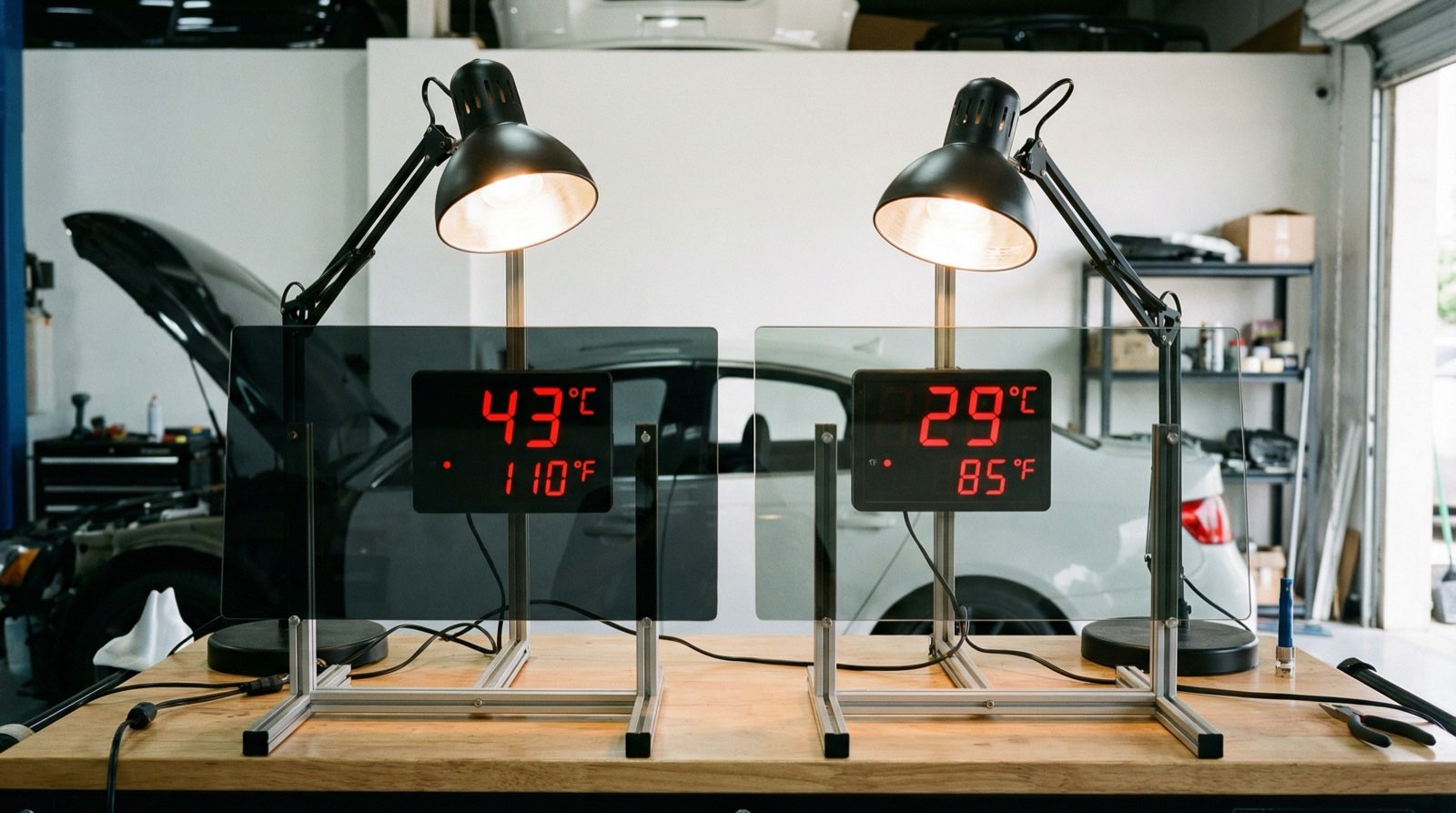
Ceramic film was engineered for exactly these conditions: high UV, high heat, long lifespan. The same ceramic technology also protects paintwork — see our ceramic coating services in Sydney for exterior paint protection. Dyed film is a false economy in this climate. It fails too fast, performs too poorly on heat, and costs more in the long run once you account for replacement.
Our Recommendation
For most cars in Sydney, ceramic window tint is the right choice. The upfront cost is higher, the performance is dramatically better, and over the life of the film you'll spend the same or less than you would on cheaper alternatives that need replacing.
If you want the full technical deep dive on ceramic film, including product comparisons and what to expect during installation, read our ceramic window tint guide.
For NSW tint laws and exactly how dark you can legally go on each window, see our darkest legal tint guide.
We fit ceramic window tint at our Hornsby and Gosford workshops. We use ceramic film at known VLT ratings, and photometric VLT verification is available if you want to confirm the exact reading on your glass.