Graphene Coating vs Ceramic Coating: Which Is Better?
05 February 2026 · 9 min read · Solarblock
Graphene coatings are a hyped product in detailing right now. But here's what most marketing won't tell you: they exist because competing brands needed an answer to the performance standard set by high-end ceramic coatings like Gtechniq Crystal Serum Ultra.
That's not a dismissal of the technology. Graphene-infused coatings have genuine technical advantages on paper — better water spotting resistance, improved heat dissipation, stronger anti-static properties. But "on paper" and "proven over a decade of Australian summers" are different conversations. Here's what we know, and what it means for your car.
What Is Graphene Coating?
Graphene coatings are SiO2-based coatings — the same silicon dioxide chemistry as ceramic coatings — with graphene oxide particles added to the formula. Graphene itself is a single layer of carbon atoms arranged in a hexagonal lattice. It's extraordinarily strong, thermally conductive, and has unique surface properties that translate into some measurable benefits when incorporated into a coating.
The key word is "incorporated." No consumer or professional coating is pure graphene. These products are ceramic coatings enhanced with graphene oxide — the base chemistry is the same SiO2 bonding that ceramic coatings have used for over a decade. The graphene component modifies the surface behaviour of the cured coating, particularly around water interaction and heat management.
Graphene coatings appeared in the professional detailing market around 2020 — notably after brands like Gtechniq had already established the benchmark for ceramic coating performance with products like Crystal Serum Ultra. They're applied the same way as ceramic coatings — liquid product, suede applicator, panel by panel, controlled environment — and the prep work (decontamination, paint correction) is identical.
What Is Ceramic Coating?
Ceramic coating is a liquid SiO2 polymer that chemically bonds to your car's clear coat, forming a semi-permanent layer that's hydrophobic, UV-resistant, and chemically resistant. It's been the industry standard for professional paint protection for over a decade.
Products like Gtechniq Crystal Serum Ultra represent the top end: 10H pencil hardness, 9+ years of rated durability, backed by a manufacturer warranty. The technology is mature, the application process is well-understood, and there are thousands of vehicles across Australia with 5+ years of real-world coating performance to reference.
For a deeper breakdown, see our post on whether ceramic coating is worth it.
Key Differences
| Feature | Graphene Coating | Ceramic Coating |
|---|---|---|
| Base chemistry | SiO2 + graphene oxide | SiO2 |
| Water contact angle | Up to 120° | ~110° |
| Water spot resistance | Higher (reduced mineral bonding) | Good |
| Heat dissipation | Better (graphene is thermally conductive) | Standard |
| Anti-static properties | Stronger (reduces dust attraction) | Moderate |
| Hydrophobic effect | Excellent | Excellent |
| UV protection | High | High |
| Chemical resistance | High | High |
| Track record | Since ~2020 | 10+ years |
| Long-term data (Australia) | Limited | Extensive |
| Price range | $500–$2,000 (professional) | $695+ / $1,100+ / $1,495+ |
The differences are real but concentrated in a few specific areas. Both coatings provide UV protection, chemical resistance, gloss enhancement, and hydrophobic behaviour. Where graphene claims an edge is in surface properties that affect water spotting and dust attraction — but it's worth asking whether those marginal gains outweigh a decade of proven performance from the best ceramic products on the market.
Water Spotting: The Main Graphene Advantage
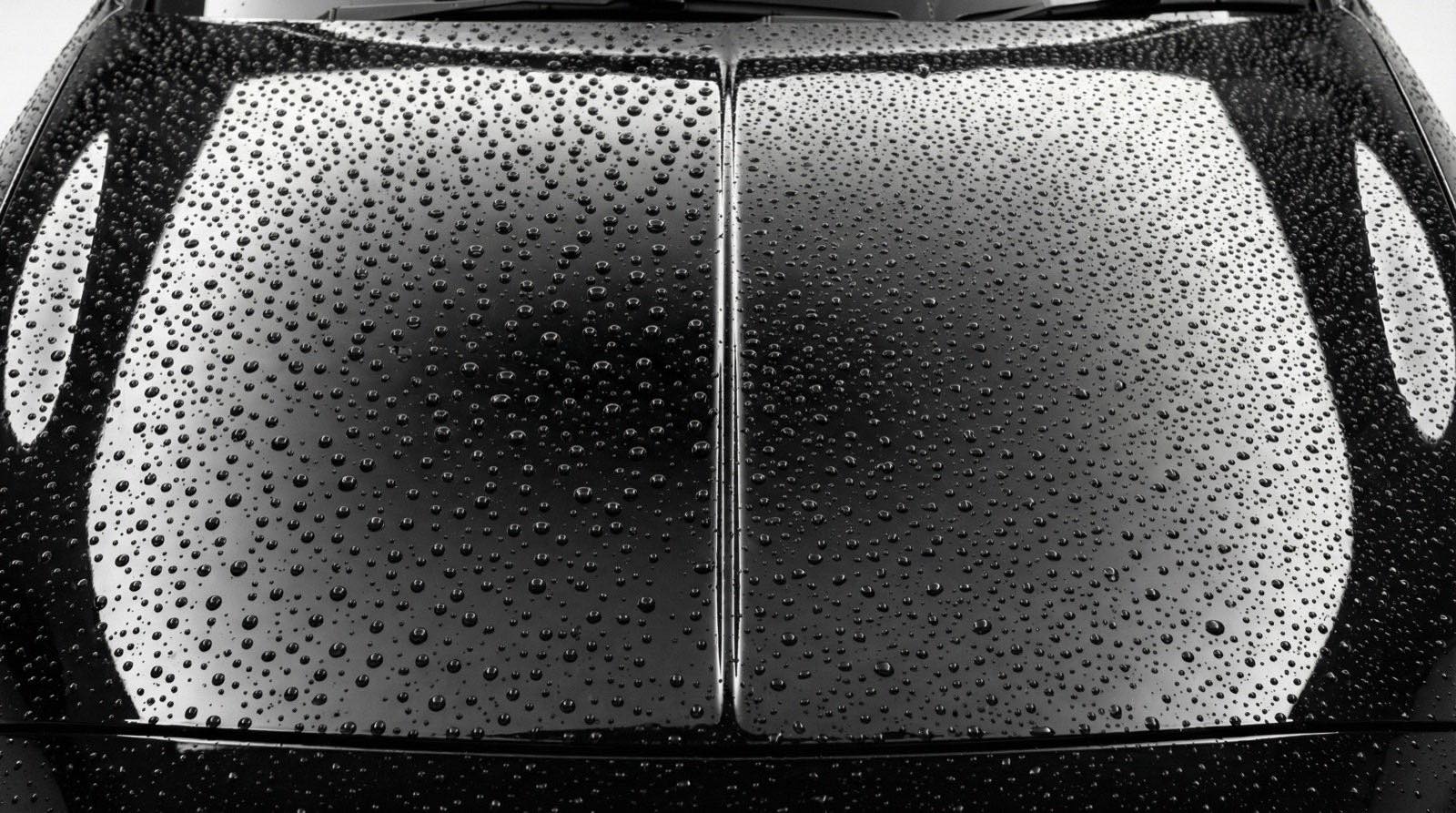
Water spots form when mineral-laden water evaporates on the paint surface, leaving calcium and magnesium deposits behind. On a coated car, these minerals can bond to the coating's surface and become difficult to remove without a chemical treatment.
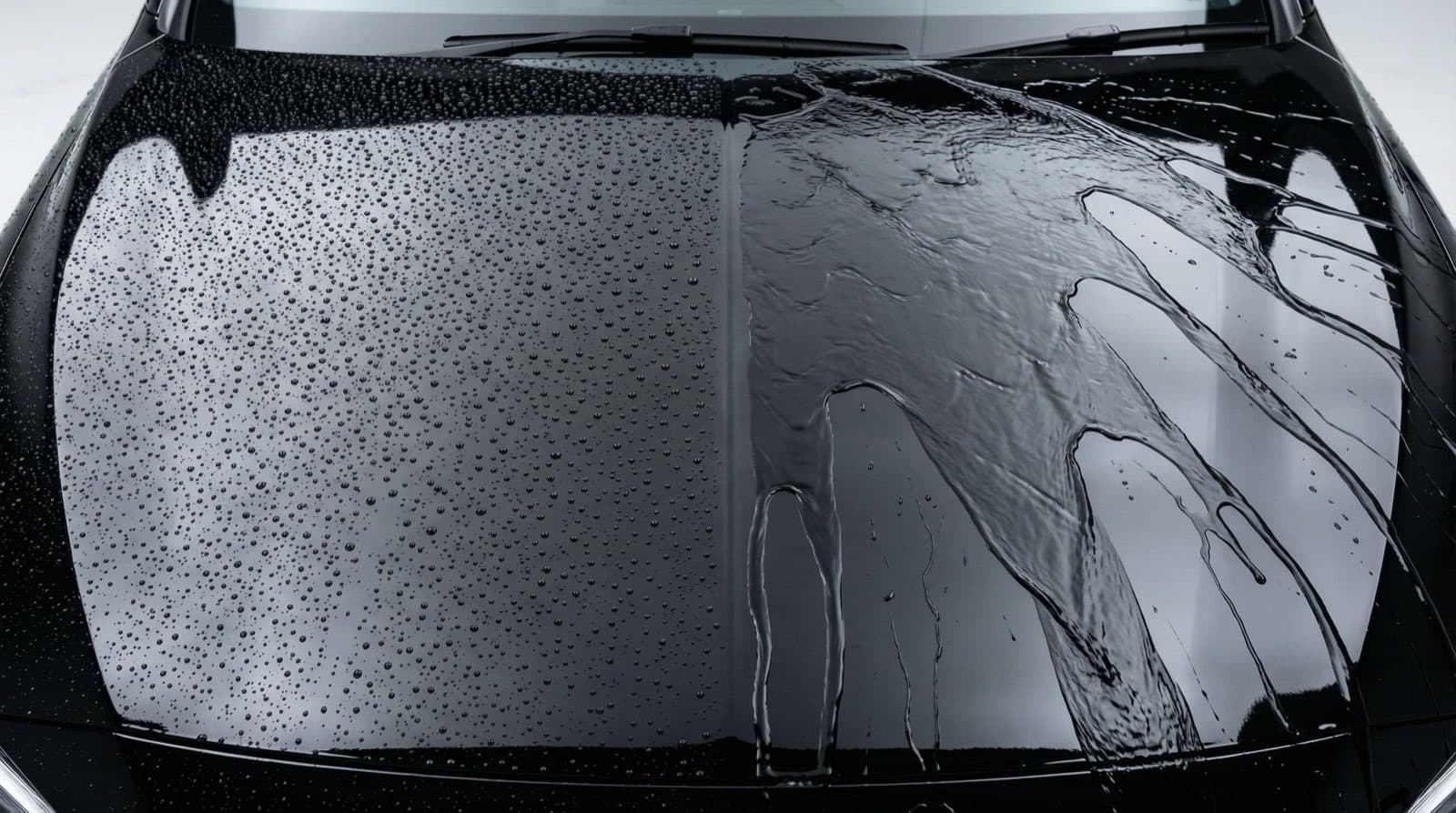
Graphene coatings address this two ways. The higher water contact angle (up to 120° vs ~110° for ceramic) means water beads tighter and rolls off more readily. And the graphene surface has reduced affinity for mineral bonding — water spots that do form are less likely to etch into the coating and easier to remove during a maintenance wash.
For cars parked outdoors near sprinklers, or in areas with hard bore water, this is a meaningful practical difference. For cars that are garaged or washed regularly, the advantage is less significant.
Heat Dissipation
Graphene is one of the most thermally conductive materials known. In a coating, this means the cured surface dissipates heat more evenly instead of creating localised hot spots.
Why does this matter? In theory, better heat dissipation reduces the chance of water spots baking onto the surface during hot weather. A dark-coloured car sitting in direct Australian sun can have panel temperatures above 80°C. Water that hits that surface evaporates almost instantly, and any minerals in the water are left behind as hard deposits. A coating that dissipates heat more efficiently gives the water slightly more time to sheet off before evaporation.
In practice, the real-world difference between graphene and ceramic coatings in this area hasn't been quantified independently under Australian conditions. The physics makes sense. The magnitude of the benefit in daily use is still an open question.
Anti-Static Properties
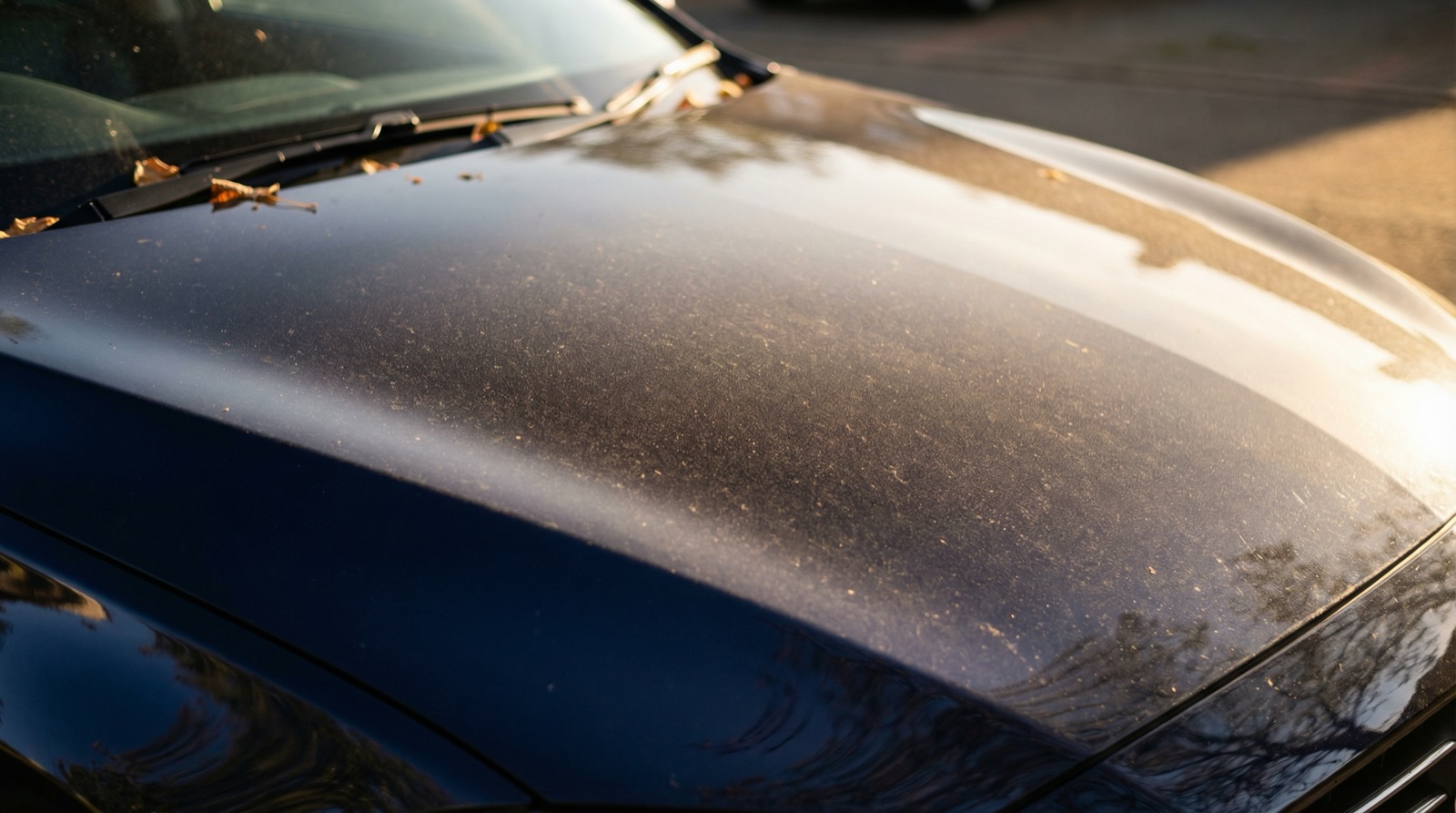
Graphene coatings show stronger anti-static properties than standard ceramic coatings. A surface with less static charge attracts less airborne dust and particulate matter between washes.
This translates to a car that stays visually cleaner for longer — less fine dust settling on horizontal surfaces like the bonnet, roof, and boot. It doesn't mean the car doesn't get dirty. It means the dust that does land sits more loosely on the surface and comes off more easily during washing.
For cars parked outdoors near construction, on dirt roads, or in dusty suburban environments, this is a noticeable quality-of-life improvement. For garaged vehicles, the benefit is marginal.
Durability and Longevity Compared
This is where the gap between graphene and top-tier ceramic coatings becomes hardest to ignore.
Ceramic coatings have 10+ years of real-world data. We can look at cars coated with Gtechniq Crystal Serum Ultra years ago and assess how the coating has held up through a decade of Australian UV, salt air, highway driving, and automated car washes (which we don't recommend, but people use them). The data exists. The performance curve is known. Crystal Serum Ultra, properly maintained, delivers on its rated lifespan — and that lifespan is backed by a 9-year manufacturer warranty.
Graphene coatings have been commercially available since approximately 2020. That's five years of market data at most, and a lot of that is from the Northern Hemisphere — milder UV, cooler summers, less extreme conditions than coastal NSW. No graphene coating on the market today can match that kind of proven track record.
Long-term performance in Australian conditions — the UV intensity, the heat cycles, the salt air on the Central Coast, the polymer-degrading combination of sun and humidity that makes this market different from Europe or North America — is simply not established yet. Manufacturers make durability claims. We'd like to see them validated under our conditions over a full product lifecycle before calling graphene a proven long-term solution.
This is the core issue. Brands that couldn't match the performance of products like Crystal Serum Ultra through conventional ceramic chemistry needed a new angle — and graphene became that angle. Whether the additive genuinely closes the gap in durability remains to be seen.
Cost Comparison
Graphene coatings typically run $500+ for professional application, depending on the product grade, extent of paint correction, and vehicle size. Our ceramic coating packages start at $695+ depending on the product tier.
The preparation work is identical — decontamination, clay bar, paint correction, panel wipe — and accounts for the majority of the labour cost. The coating product itself is a relatively small portion of the total price. Switching from a ceramic product to a graphene product doesn't significantly change the cost of the job.
If you're choosing between the two purely on price, there's no meaningful difference.
Want proven paint protection?
We use Gtechniq Crystal Serum Ultra — 10+ years of Australian field data. Hornsby & Gosford.
Get a Free Ceramic Coating QuoteOr call: 0422 976 875
Which Should You Choose?
Choose graphene coating if:
- Your car is parked outdoors full-time, particularly in areas with hard water or sprinkler exposure
- You're in a dusty environment and want to maximise time between washes
- You're comfortable with a newer product category that has strong theoretical backing but less long-term field data
- Water spotting has been a specific issue for you in the past
Choose ceramic coating if:
- You want the best overall paint protection available — proven hardness, durability, and chemical resistance
- You value a product with a known performance curve in Australian conditions, not lab claims from overseas
- You want a manufacturer-backed 9-year warranty from Gtechniq, a company with a decade-plus track record
- You'd rather invest in the product other brands are trying to catch up to, not the ones doing the catching up
Our Recommendation
We use ceramic coating — specifically Gtechniq Crystal Serum Ultra — because it's the best-performing paint protection product available. Full stop.
Graphene coatings exist because competing brands needed a way to differentiate themselves from the standard that Gtechniq set. When your ceramic coating can't match Crystal Serum Ultra's hardness, durability, or warranty on its own merits, adding a trending nanomaterial to the formula gives you a marketing story. That's what's happening across the detailing industry right now — graphene is being added to coatings, films, and toppers not because it solves a problem that the best ceramic products haven't already solved, but because it gives other brands something new to talk about.
The technical merit is real. Graphene's water spot resistance, heat dissipation, and anti-static properties are supported by material science. But Crystal Serum Ultra already delivers 10H hardness, a 9-year manufacturer warranty, and a decade of proven performance through Australian UV, salt air, and extreme heat cycles. The marginal surface property improvements graphene offers don't outweigh that kind of track record.
When a graphene coating can demonstrate — in our conditions, over a full product lifecycle — that it outperforms Crystal Serum Ultra, we'll take it seriously. Until then, we're recommending the product that's already proven itself as the best in the market, not the products trying to catch up to it.
If you're looking for an installer and want to know what separates a quality job from a marketing claim, see our guide to the best ceramic coating in Sydney.