Is Paint Protection Worth It on a New Car?
19 August 2026 · 13 min read · Solarblock
Short answer: yes, for most new car owners. Professional ceramic coating (from $795+ at Solarblock's Hornsby and Gosford workshops) protects paint from UV, bird droppings, and chemical damage for years. It's not the same product as dealer paint protection, which is typically a spray-on sealant that lasts months. If you plan to keep the car longer than two years, ceramic coating pays for itself in reduced maintenance. If you're selling within a year, skip it.
You just spent tens of thousands on a new car. The dealer is asking another $1,000 for "paint protection." Your mate reckons a $30 tin of wax does the same thing.
He's partly right. But "paint protection" means completely different products depending on who's selling it. What the dealer sprays on in the service bay is not what a professional applies in a controlled workshop. And neither of those is the same as paint protection film. Same category, different jobs entirely.
Dealer paint protection vs professional coating
Most dealer paint protection is a spray-on polymer sealant. It's applied in the service bay, usually by one of the detail staff. The product itself is a step up from off-the-shelf spray wax, but it's not in the same league as a professional ceramic coating. Dealers charge $500 to $1,500 for a product that typically lasts 6 to 12 months before the hydrophobic effect fades.
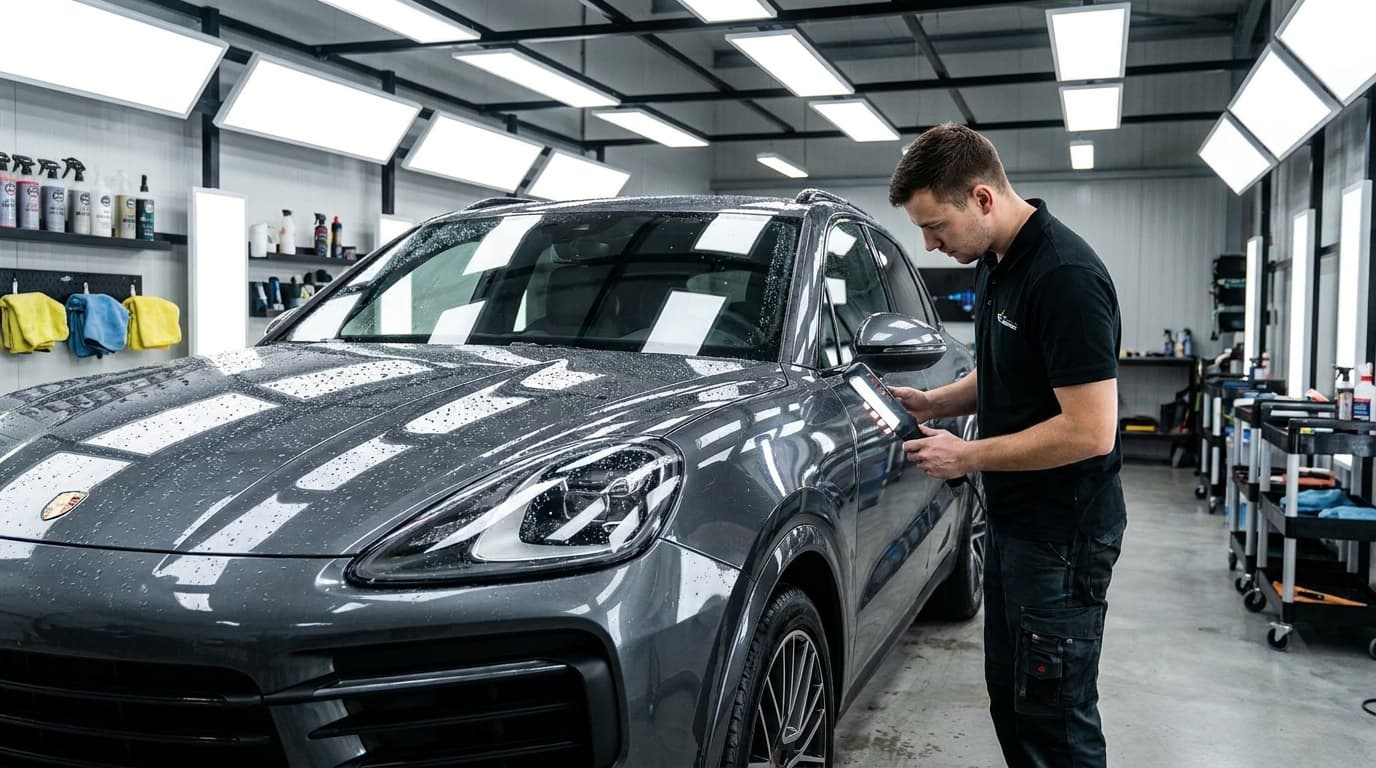
Professional ceramic coating is not the same process. The paint gets decontaminated and machine-corrected to remove swirl marks, then a liquid SiO2 coating is applied by hand, panel by panel, in a controlled workshop. The coating bonds to the clear coat at a molecular level. Products like Gtechniq Crystal Serum Ultra carry a 9-year manufacturer warranty and achieve 10H pencil hardness once cured.
We work with a few dealerships who refer customers to us for coating after purchase. They know the difference between what they offer in the service bay and what we do in the workshop.
| Dealer paint protection | Professional ceramic coating | |
|---|---|---|
| Product | Spray-on polymer sealant | SiO2 ceramic coating (e.g. Gtechniq Crystal Serum Ultra) |
| Application time | 20-30 minutes | Full day (includes decontamination and paint correction) |
| Durability | 6-12 months | 2-9+ years depending on product grade |
| Hardness | No measurable hardness rating | Up to 10H pencil hardness |
| Typical cost | $500-$1,500 at the dealer | From $795+ at Solarblock |
| Warranty | Varies, often limited | Up to 9-year manufacturer warranty |
When paint protection IS worth it
You plan to keep the car more than two years. Ceramic coating pays for itself through reduced maintenance and paint preservation, but only if you keep the car long enough for those savings to accumulate. Two years is the break-even point for entry-level coatings. A flagship product like Gtechniq Crystal Serum Ultra, which we apply at our Hornsby and Gosford workshops, protects for the better part of a decade.
Your car lives outdoors. If you park in a garage at home and undercover at work, the paint faces less stress. If the car sits in a driveway or an open carpark all day in Sydney's UV, it's getting hit by sun, bird droppings, and tree sap every single day. A coating applied now stops that damage accumulating for the next five to nine years depending on the product.
You drive on the highway. Pacific Highway, M1, any stretch with roadworks or trucks kicking up debris. Stone chips on the bonnet are cumulative and irreversible without a respray. Paint protection film is the only product that stops them.
You have dark paint. Black, dark grey, navy blue. These colours show every swirl mark and water spot. A ceramic coating won't prevent contact damage, but the hydrophobic surface reduces friction during washing. That means fewer wash-induced swirls over time, and the paint holds its gloss longer.
You want your weekends back. A coated car takes ten minutes to wash. An uncoated car takes 40 minutes to an hour if you're doing it properly with wax. Multiply that by 50 weekends a year and the time savings alone justify the cost for most people. A customer with a dark grey Tucson told us six months after coating that the biggest difference wasn't the gloss or the protection. It was that washing the car stopped being a pain.
You don't enjoy detailing. Some people genuinely like spending a Saturday afternoon waxing the car. If that's you, keep reading to the DIY section. If not, professional coating is the set-and-forget option.
When it's NOT worth it
You're selling within a year. The car is a stopgap and you'll move it on in 6 to 12 months. A professional coating won't pay itself back. Get a proper hand wash and a spray sealant before the sale. That's a $200 detail, not a $1,000 coating job.
The car barely moves. A weekend car that lives in a climate-controlled garage and does 3,000 km a year. The paint isn't under enough stress to justify the spend. A quality wax or sealant every couple of months will keep it looking sharp.
You genuinely enjoy the process. Washing and waxing is your Saturday ritual. You find it relaxing. A ceramic coating removes the thing you enjoy. We tell customers that, and we mean it.
If none of those three describe your situation, the rest of this article is for you.
The DIY option: wax, sealants, and consumer ceramics
Carnauba wax works. It gives a warm, deep gloss that some people prefer over the wet-look finish of ceramic coating. The trade-off is that it lasts 4 to 8 weeks on a daily driver. After that, the paint is unprotected until you reapply.
Synthetic spray sealants stretch that to 3 to 6 months. Better durability, easier application, decent UV protection. For someone who's willing to reapply a few times a year, this is a reasonable option.
Consumer ceramic sprays go further. They contain SiO2 at lower concentrations than professional-grade coatings, but a decent one will last 6 to 12 months. They're easy to apply and they do add hydrophobic protection. They're useful as maintenance toppers on a car that already has a professional coating, but they don't match the hardness, chemical resistance, or longevity of a proper professional application.
One thing to be clear on: DIY only covers the coating side of things. PPF and window tinting are professional-only jobs. PPF requires precision-cut templates, a controlled dust-free environment, and experience with heat forming around complex panels. DIY kits exist, but the results on anything other than a flat surface are usually bubbles, lifting edges, and wasted film. Tinting is the same story. Bad application means bubbles, creasing, and if the VLT ends up wrong you're looking at a defect notice and a fine.
If you enjoy detailing and you're willing to put in the time, DIY wax or ceramic spray will keep your paint looking good. For a new car owner who just wants the thing to stay clean and protected without thinking about it, professional coating saves more time and effort over the ownership period than any spray bottle from an auto shop.
Is ceramic coating worth it on a new car compared to waxing? Over a two-year period, a tin of quality carnauba runs $20 to $50 and needs reapplying every month or two, plus the time. A professional ceramic coating from Solarblock starts at $795+ once, lasts years, and cuts wash time from 40 minutes to ten. The maths favours coating for anyone who isn't doing it as a hobby.
Just picked up a new car?
We'll put together a protection package based on how you use it. Hornsby & Gosford workshops.
Get a Free Protection QuoteOr call: 0422 976 875
The three types of professional protection
Ceramic coating is the baseline. It bonds to the clear coat and creates a hydrophobic, UV-resistant surface. Water beads off, bird droppings and tree sap release without etching, and UV can't reach the paint underneath. What it doesn't do is stop stone chips. That's a physical impact, and ceramic coating is a chemical barrier. Starts from $795+. For the full breakdown, see is ceramic coating worth it.
Then we have paint protection film (PPF). This clear polyurethane film acts as a barrier against the stuff ceramic coatings can't handle. Stone chips, gravel rash, minor scratches? All absorbed. Quality film like LLumar Valor self-heals light scratches with heat. A full front kit (bonnet, bumper, guards, mirrors, headlights) starts from $2,500+. See our PPF cost guide for the full pricing breakdown.
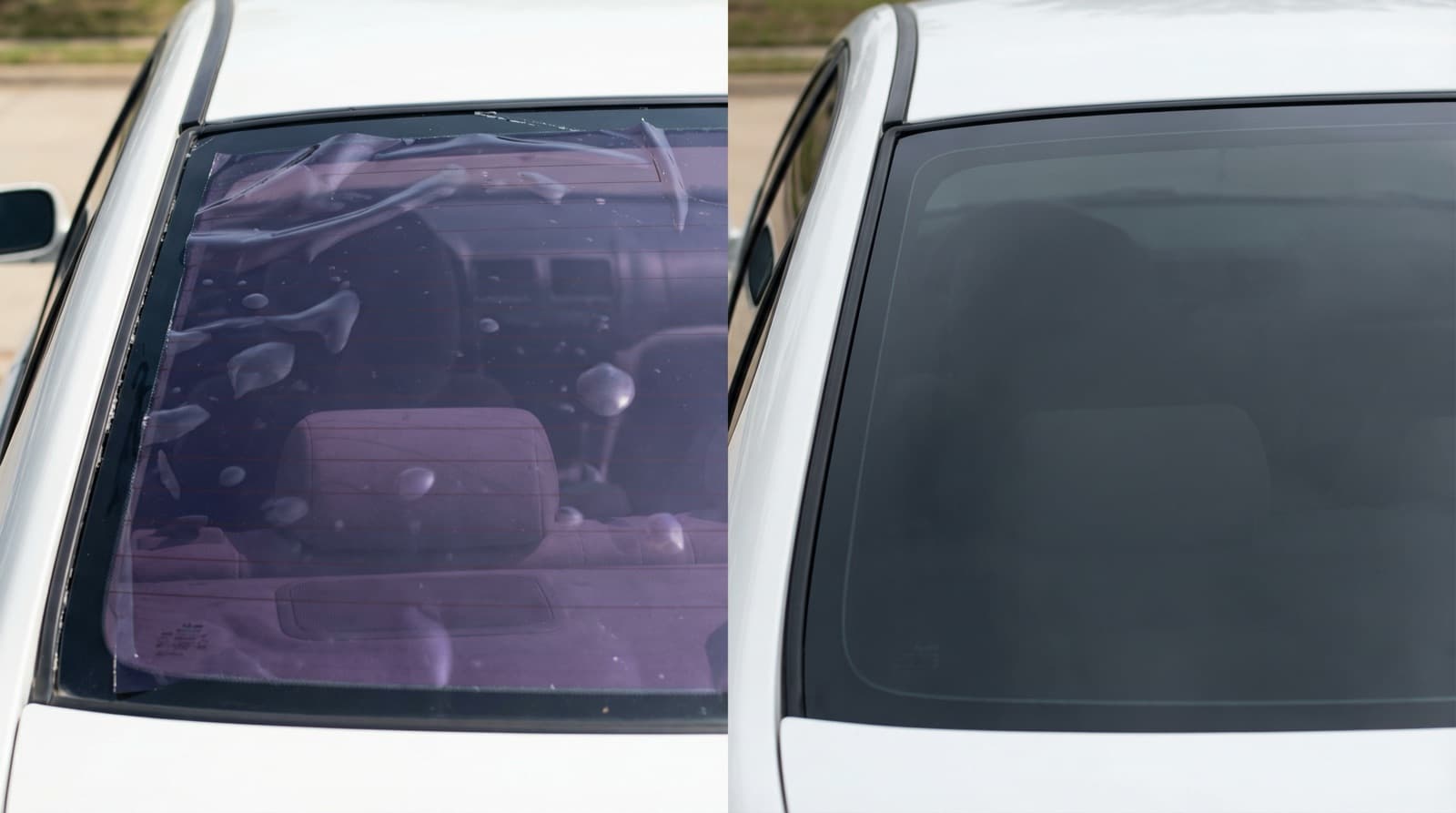
Then there's window tinting. Ceramic tint blocks UV and infrared through the glass. It rejects cabin heat without the signal interference you get from metallic films, and it slows interior fading. Starts from $595+ for ceramic film. More detail on our window tinting page.
For the full comparison between PPF and ceramic coating, read PPF vs ceramic coating. Ceramic coating stops UV and chemical damage. PPF stops rocks. They don't overlap. For maximum protection on a new car, PPF goes on first, then ceramic coating over everything including on top of the film. Our new car protection guide covers each option in detail.
What it costs
Realistic numbers for new car protection:
| Protection Type | Starting Price | What It Does |
|---|---|---|
| Ceramic coating | $795+ | UV, chemical, and environmental protection |
| PPF (full front) | $2,500+ | Stone chip and scratch protection |
| Window tinting (ceramic) | $595+ | Heat rejection, UV protection, privacy |
Entry-level ceramic coating at $795+ is the starting point for most new car owners. If the car commutes on the M1 or Pacific Highway, adding full front PPF at $2,500+ covers the panels that take the worst stone chip damage.
The flagship option, Gtechniq Crystal Serum Ultra at $1,650+, gives you 10H hardness and a 9-year manufacturer warranty. On a car you plan to keep long-term, the cost per year of protection is lower than regular waxing and detailing.
Why day one is the cheapest time
A new car's paint needs minimal preparation before coating. The clear coat is fresh. Swirl marks are limited to whatever the dealer's wash bay added during pre-delivery, which is usually just a light single-stage correction to sort out.
Six months down the road, the paint has accumulated UV damage, water spots, bird dropping etches, micro-scratches from washing, and possibly stone chips. All of that needs correcting before a coating can go on. Paint correction adds time, labour, and cost to the job.
We had two customers come in the same month last year.
One brought in a brand new Hyundai i30 to our Hornsby workshop the week he picked it up. The paint needed a light single-stage correction to remove dealer wash marks, then straight to Crystal Serum Ultra. Because the car was basically factory fresh, the whole job was done in a day.
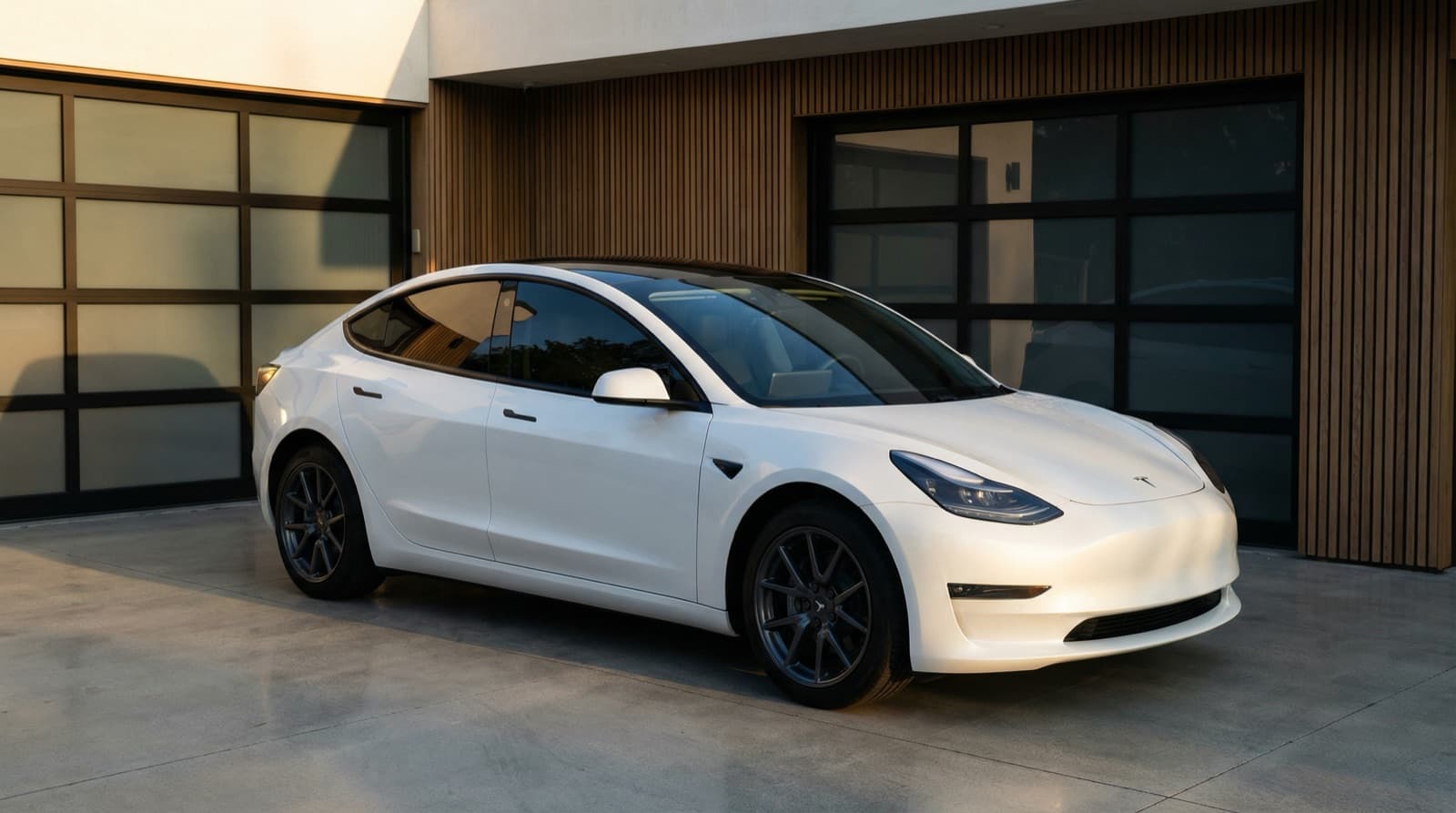
The other brought in a white Model 3 at six months old. Daily highway commute. The bonnet had dozens of stone chips. The roof had water spot etching from outdoor parking. The correction work alone added hours to the job, and those stone chips are permanent. If the car had come in during the first week, none of that extra work would have been needed, and the bonnet would still be unmarked.
Your new car is in the best condition it will ever be in. Every week you wait, the paint picks up damage that costs money to fix before coating. The price of protection doesn't change. The price of preparation does.
So should you protect your new car? If you're keeping it and it sees regular use, yes. Get it done in the first few weeks while the paint is fresh and the prep work is minimal. At Solarblock we do new cars within days of purchase. The job is faster, the cost is lower, and the paint is covered from day one.
The verdict
If you plan to keep the car more than two years and it sees regular use, paint protection is worth it. Start with ceramic coating at minimum.
Here's why. A professional detail costs $150 to $400. At three or four a year to keep uncoated paint looking decent, you're spending $500 to $1,500 annually. A ceramic coating from $795+ (Solarblock's entry-level package) pays for itself within the first year in reduced maintenance alone, and it keeps working for years after that. On a car that cost you $50,000 or more, that's a fraction of the purchase price for protection that lasts most of the ownership period.
If the car does highway driving, add PPF to the front end. Stone chips on the bonnet are the one thing ceramic coating can't stop, and a full front kit at $2,500+ saves you from a bonnet respray that costs more than the film did.
If you're selling within a year, skip it. Get a detail and a sealant. If you love detailing as a hobby, keep waxing.
For everyone else: get it done while the car is new and the prep costs are low. We'll give you a free quote based on your car and how you use it. No obligation, no pressure.
Ready to protect your new car?
Free quote based on your car, your budget, and how you drive. No obligation. Hornsby & Gosford.
Get a Free Protection QuoteOr call: 0422 976 875
See our full new car protection guide for the detailed breakdown of every option, or get in touch for a quote tailored to your car.
Frequently Asked Questions
Is paint protection worth it on a new car?
Yes, for most new car owners who plan to keep the vehicle more than two years. Professional ceramic coating (from $795+) protects against UV, bird droppings, and chemical damage. PPF (from $2,500+) stops stone chips. Both are most cost-effective when applied to new paint because no correction work is needed.
Is ceramic coating worth it on a new car?
Yes. New paint needs minimal correction before coating, which keeps the cost lower. A ceramic coating like Gtechniq Crystal Serum Ultra protects against UV damage, chemical etching, and oxidation for 9+ years. It also cuts your wash time in half and keeps the paint looking new for longer.
Should I ceramic coat my new car?
If you plan to keep the car more than two years and it sees regular use, yes. Ceramic coating protects the paint from day one, before UV and environmental damage start accumulating. The longer you wait, the more correction work the paint needs before coating, which adds to the cost.
Is dealer paint protection the same as ceramic coating?
No. Dealer paint protection is typically a spray-on polymer sealant applied in minutes. Professional ceramic coating is a multi-stage process involving paint decontamination, correction, and hand application of an SiO2-based coating that bonds to the clear coat. They are different products with very different longevity and performance.
Can I just wax my new car instead of getting it coated?
You can. Carnauba wax lasts 4 to 8 weeks on a daily driver before it needs reapplying. If you enjoy detailing as a hobby and you're happy to wax every few weeks, it's a valid option. For everyone else, professional ceramic coating is the set-and-forget alternative that lasts years instead of weeks.